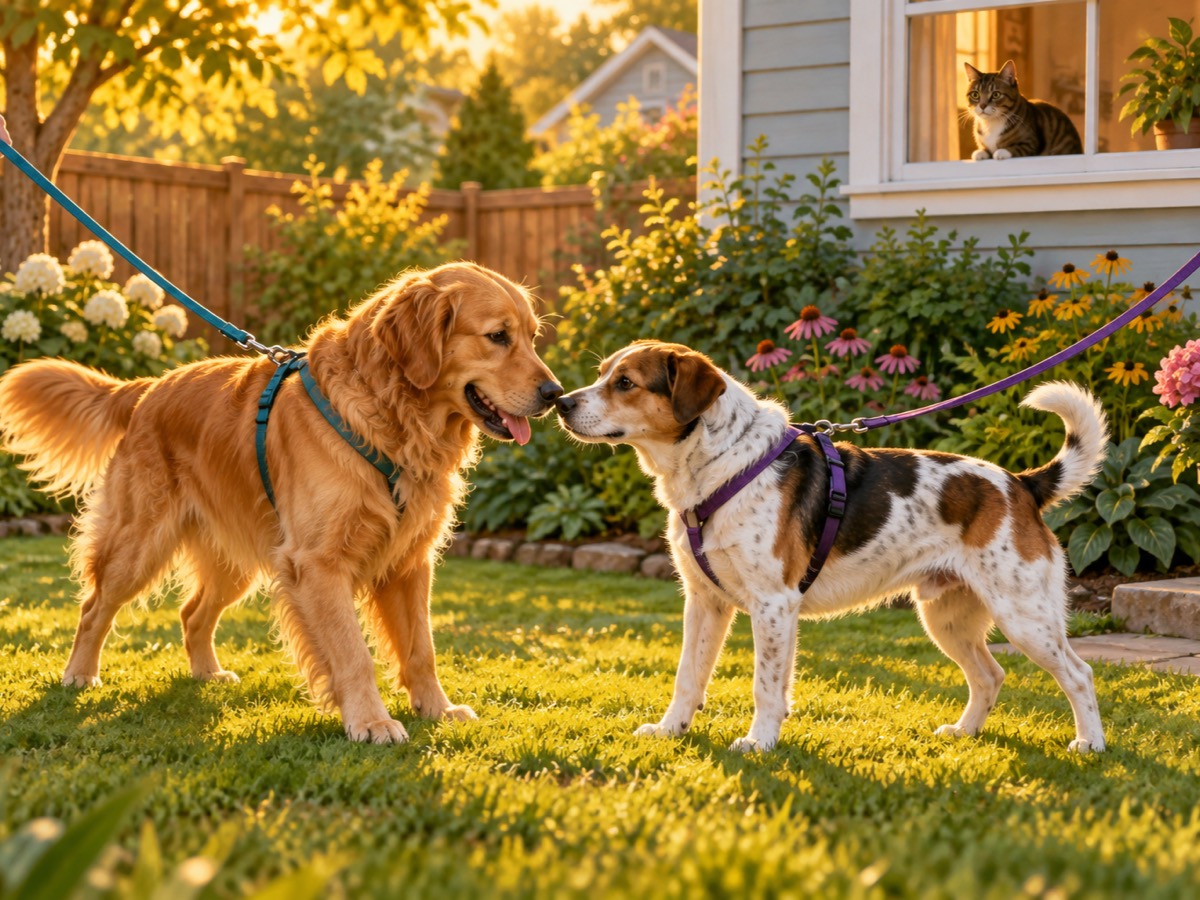

Ask five dog owners how much exercise a dog needs and you’ll get five different answers, ranging from “a quick trip around the block” to “an hour of fetch before breakfast.” The honest answer is that there’s no single number. Most veterinary guidance lands somewhere between thirty minutes and two hours of activity a day, and where your dog falls in that range depends on age, breed, health, and personality. The good news: once you learn to read your own dog, dialing in the right amount is easier than you’d think.
What matters most is that exercise happens consistently, in a form your dog actually enjoys, and at an intensity their body can handle. A bored Border Collie and a creaky fourteen-year-old Pug both need daily movement, but what that looks like couldn’t be more different.
Why Breed and Energy Level Change Everything
Breed history is the biggest single factor in how much exercise a dog needs. Dogs bred to work all day, like herding breeds, sporting breeds, and many terriers, were selected for stamina and drive. A young Australian Shepherd or Labrador Retriever can happily absorb an hour or two of real activity daily and still have gas in the tank. Give that same dog fifteen minutes of leash walking and nothing else, and you’ll often see the surplus energy reappear as chewed furniture, digging, or nonstop barking.
On the other end of the spectrum, many toy breeds and lower-energy companions are content with a couple of modest walks plus indoor play. And flat-faced (brachycephalic) breeds like Bulldogs and Pugs need special care: their shortened airways make it harder to pant efficiently, so intense exercise, especially in warm or humid weather, can quickly become dangerous. Short, gentle sessions in the cool parts of the day are the safer pattern for them.
If you’re still deciding which dog to bring home, be brutally honest about your own activity level first. Our guide to choosing the right dog breed for your lifestyle digs into how to match a breed’s exercise needs to your real week, not your aspirational one.
Puppies: Little and Often, Not Long and Hard
Puppies seem like perpetual motion machines, but their skeletons are still under construction. Growing bones contain soft areas called growth plates, and these don’t fully close until somewhere between roughly one and two years of age, later in large and giant breeds. Repetitive, high-impact exercise before the growth plates close, think long leashed runs or endless stair sprints, can stress developing joints in ways that may cause lasting problems.
A widely used rule of thumb suggests limiting structured exercise, such as leash walks, to about five minutes per month of age, once or twice a day. So a four-month-old puppy would get roughly twenty-minute outings. It’s a guideline rather than a law, and free play on soft ground where the puppy sets their own pace is generally much more forgiving than forced marching. The pattern that serves puppies best is several short bursts of play, sniffing, and training spread through the day, with plenty of naps in between.
Adults and Seniors: Adjust the Dial, Don’t Turn It Off
Healthy adult dogs are the easiest group: find activities you both enjoy, aim for that thirty-minutes-to-two-hours window based on breed and enthusiasm, and keep it regular. Weekend-warrior patterns, where a dog lounges all week and then hikes ten miles on Saturday, invite strains and soreness just as they do in people.
Senior dogs still need daily movement; it keeps joints lubricated, muscles supportive, and minds engaged. What changes is intensity. Shorter, more frequent walks, gentle play, and swimming where available are kinder to aging joints than hard running. Watch for lagging behind, stiffness after rest, or reluctance to jump, and loop in your veterinarian if you see them, since pain is treatable and shouldn’t be written off as “just old age.” We cover this in more depth in our guide to managing age-related issues in senior dogs.
Don’t Forget the Brain: Mental Exercise Counts
Physical exertion is only half the equation. A dog who trots the same three blocks on a tight leash every day is getting steps in, but very little else. Dogs experience much of the world through their noses, and a slow “sniffari” walk, where your dog chooses the route and investigates every fascinating smell, can tire them out more thoroughly than a brisk march of the same length.
Mental work isn’t a replacement for physical exercise, but it’s a powerful complement, and on rainy days or during injury recovery it can carry more of the load. Easy options include:
- Short, upbeat training sessions working on basic obedience skills, five minutes of focused learning is genuinely tiring
- Food puzzles, snuffle mats, or scattering kibble in the grass so your dog has to hunt for dinner
- Simple scent games, like hiding a treat under one of three cups and letting your dog find it
- Rotating toys weekly so old favorites feel new again
Signs You’ve Got the Balance Wrong
Your dog will tell you when the exercise budget is off, if you know what to look for. An under-exercised dog often shows it behaviorally: restlessness in the evening, destructive chewing, attention-seeking barking, pulling hard on every walk, or manic “zoomies” that never seem to burn off. If those sound familiar, try adding twenty minutes of activity plus one mental-enrichment session a day for two weeks and watch what changes.
Over-exercise shows up physically. Watch for heavy panting that continues long after activity ends, lagging or lying down mid-walk, stiffness or limping the next day, and worn or torn paw pads. Overweight dogs and flat-faced breeds deserve extra caution, because pushing them too hard in heat raises the risk of heatstroke, which is a genuine emergency. It’s worth knowing the basics of pet first aid before you need them.
Heat deserves its own mention: on hot days, shift exercise to early morning or evening, stick to shade and grass rather than sun-baked pavement, and always bring water.
Building a Routine That Sticks
The best exercise plan is the one that actually happens. Anchor activity to things you already do daily, a walk before your morning coffee, a training game while dinner cooks, and it stops requiring willpower. Mix it up across the week: a couple of longer outings, some sniff-heavy wanders, a game of fetch or tug, and a training session or two covers both body and brain without demanding hours you don’t have.
Finally, treat your veterinarian as a partner. If your dog has a health condition, is significantly overweight, or you’re planning a big jump in activity, a quick conversation at your next checkup can help you set a safe starting point. Then pay attention to the dog in front of you. A dog who ends most days pleasantly tired, settles easily in the evening, and greets the leash with delight rather than desperation is a dog whose exercise needs are being met, whatever the number of minutes turns out to be.