If you own a dog anywhere in Nigeria, heat is not a seasonal inconvenience. It is a daily management question. From the humid coastal stretch of Lagos and Port Harcourt to the drier, hotter interior of Kano and Maiduguri, temperatures regularly sit in ranges that push dogs toward the edge of what their bodies can handle. Dogs do not sweat the way we do. They cool themselves mainly by panting, and panting works poorly when the air itself is hot and heavy with humidity. That is why a dog can slip from uncomfortable to genuinely ill faster than most owners expect.
The good news is that keeping a dog safe and comfortable in Nigerian heat is mostly a matter of routine, not money. This guide walks through what heat actually does to dogs, which dogs are most at risk, and the practical adjustments that work in a Nigerian home, including one nobody writing for an American audience thinks about: what to do when NEPA takes the light and your fan goes off.
Why heat hits dogs harder than it hits you
Veterinary sources define heatstroke as a dangerous rise in body temperature above about 40°C that is not caused by fever. It is progressive and it moves fast. Once a dog’s cooling system is overwhelmed, organs begin to suffer, and without quick action the condition can be fatal. Humidity makes everything worse, because panting relies on evaporation, and evaporation barely works when the air is already saturated. A humid 33°C afternoon in Lagos can be more dangerous for a dog than a drier 38°C day inland.
Some dogs carry extra risk. Flat-faced breeds such as Bulldogs, Pugs, and Boxers, which have become fashionable in Nigerian cities, struggle to move enough air to cool themselves even on a mild day. Thick-coated imports like Caucasian Shepherds and Rottweilers, popular as guard dogs, wear a coat built for a climate we simply do not have. Puppies, older dogs, overweight dogs, and dogs with heart or breathing problems are all more vulnerable. If your dog falls into any of these groups, treat every hot afternoon with extra respect.
Build the day around the sun
The single most effective change you can make costs nothing: move exercise out of the hot hours. Veterinary guidance is consistent that dogs should not be walked or worked during the hottest stretch of the day, roughly late morning to late afternoon. In practical Nigerian terms, that means walks and play happen early in the morning, before the sun has real strength, or in the evening after it has dropped.
- Walk before 9 a.m. or after 5 p.m., and keep midday outings to quick toilet breaks in the shade.
- Test the ground with the back of your hand. If concrete or interlocking paving is too hot for you to hold your hand on for a few seconds, it will burn your dog’s paw pads.
- During exercise, pause for rest and water every fifteen minutes or so. Dogs will often keep playing past the point where they should stop.
- Never leave a dog in a parked car, even briefly, even with windows cracked. The interior heats to lethal temperatures within minutes.
For dogs that live outside as guard dogs, shade is not optional. A zinc-roofed kennel in direct sun becomes an oven. Position the kennel where a wall, tree, or building shades it through the afternoon, raise it slightly off hot ground, and make sure the dog can always move out of direct sunlight. A guard dog collapsing from heat protects nobody.
Water, shade, and airflow, even when the power goes
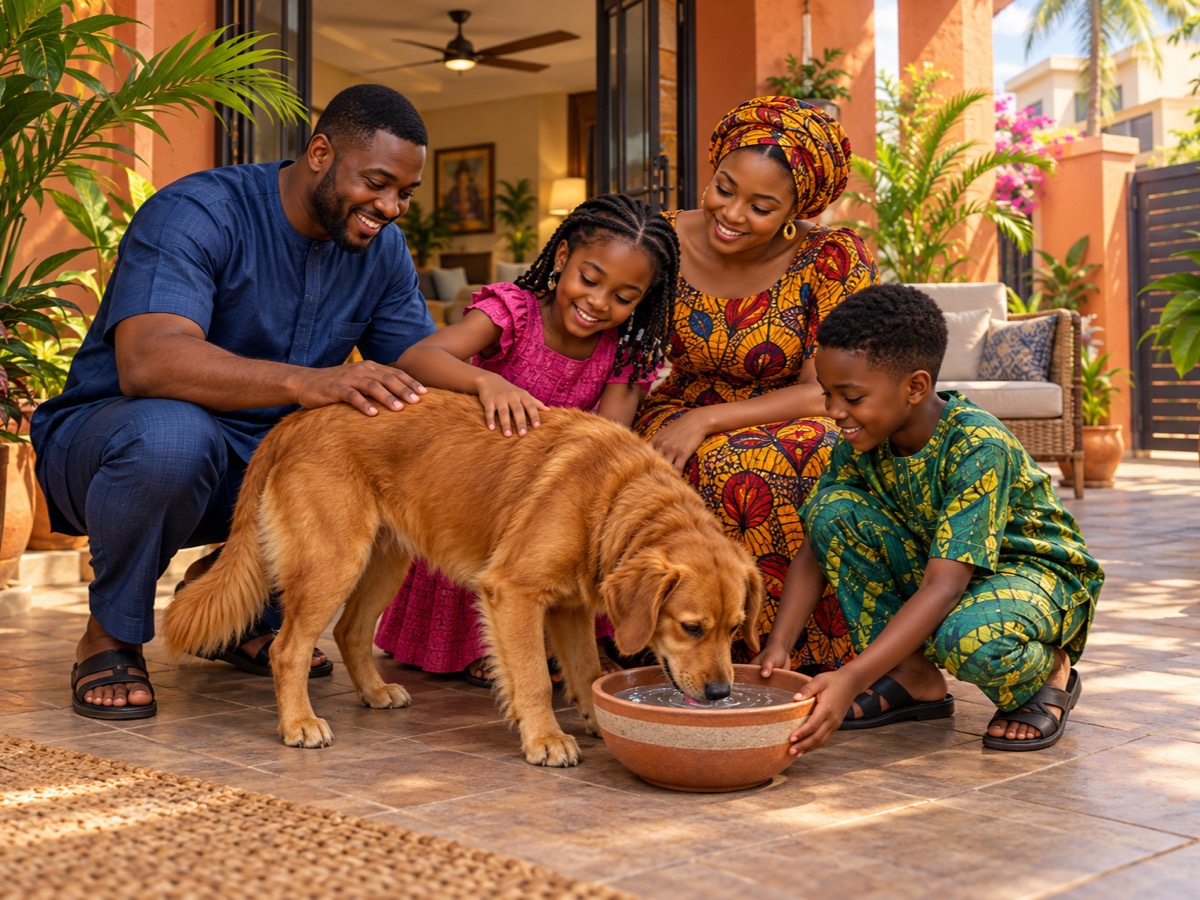
Fresh water should be available at all times, in more than one location, and out of direct sun. Metal bowls left outside heat up quickly and can make water unpleasantly warm, so use plastic or ceramic bowls in shaded spots and refresh them at least twice a day. Dropping a few cubes from your freezer into the bowl during the hottest hours is a cheap upgrade your dog will appreciate.
Then there is the uniquely Nigerian problem: your cooling plan probably depends on a fan or air conditioning, and the power supply does not respect your plan. It is worth deciding in advance what happens when the light goes in the middle of a hot afternoon.
- Identify the naturally coolest spot in your home, usually a tiled floor in a cross-ventilated room away from western sun, and make sure your dog can reach it. Tiles pull heat out of a dog’s body better than any mat.
- Open windows on opposite sides of the house to create a cross-breeze whenever the fan is off.
- Keep a basin and towel ready. Wetting your dog’s belly, armpits, and paws with room-temperature water and letting the breeze do the rest is effective low-tech cooling.
- If you run a generator or inverter for part of the day, schedule it around the hottest hours rather than the evening, for your dog’s sake as much as yours.
- A shallow basin of water in a shaded corner of the compound gives dogs a place to stand and cool their paws.
Feeding and grooming for hot weather
Appetite often dips in serious heat, and that is normal. Feed the main meal in the cool of the evening or very early morning, and do not exercise your dog right after eating. Wet food and broths add useful fluid. If you want a refresher on quantities and timing generally, see our guide to feeding your dog right.
Grooming matters more than most owners realize, but shaving is usually the wrong answer. A dog’s coat insulates against heat as well as cold and protects the skin from sunburn. Regular brushing to remove dead undercoat helps far more than clipping to the skin. For heavy-coated breeds, ask a vet before any drastic haircut.
Recognizing heatstroke and acting fast
Every Nigerian dog owner should be able to recite the warning signs, because minutes matter. Watch for heavy, frantic panting that does not settle, thick sticky saliva, gums that turn bright red or pale, vomiting or diarrhea, wobbling, confusion, or collapse. A dog that suddenly seems drunk on a hot day is an emergency, full stop.
If you suspect heatstroke, move the dog to shade or indoors immediately and begin cooling with lukewarm or cool water over the body, especially the belly and paws, with a fan or breeze blowing across the wet coat if possible. Do not use ice or ice-cold water, which constricts blood vessels and can push the dog into shock. Offer small amounts of water to drink but do not force it. Then get to a veterinarian without delay, because dogs that look recovered can still be in danger from internal damage. Research shows that cooling a dog before arrival at the clinic dramatically improves survival, so do both: cool first, travel cooled. Keeping these steps alongside the rest of your emergency knowledge is worth the effort, and our post on first aid for pets covers the broader kit to have ready.
A rhythm that works all year
Nigeria does not really have a season when heat stops being a concern, only months when it eases. The habits above are not a checklist for one bad week in March. They are a rhythm: early walks, constant shaded water, a power-cut plan, and eyes that know the danger signs. Dogs thrive here, from local breeds that handle the climate with ease to imports that need more help. Give yours the routine the climate demands, and the heat becomes something you manage together rather than something you fear.