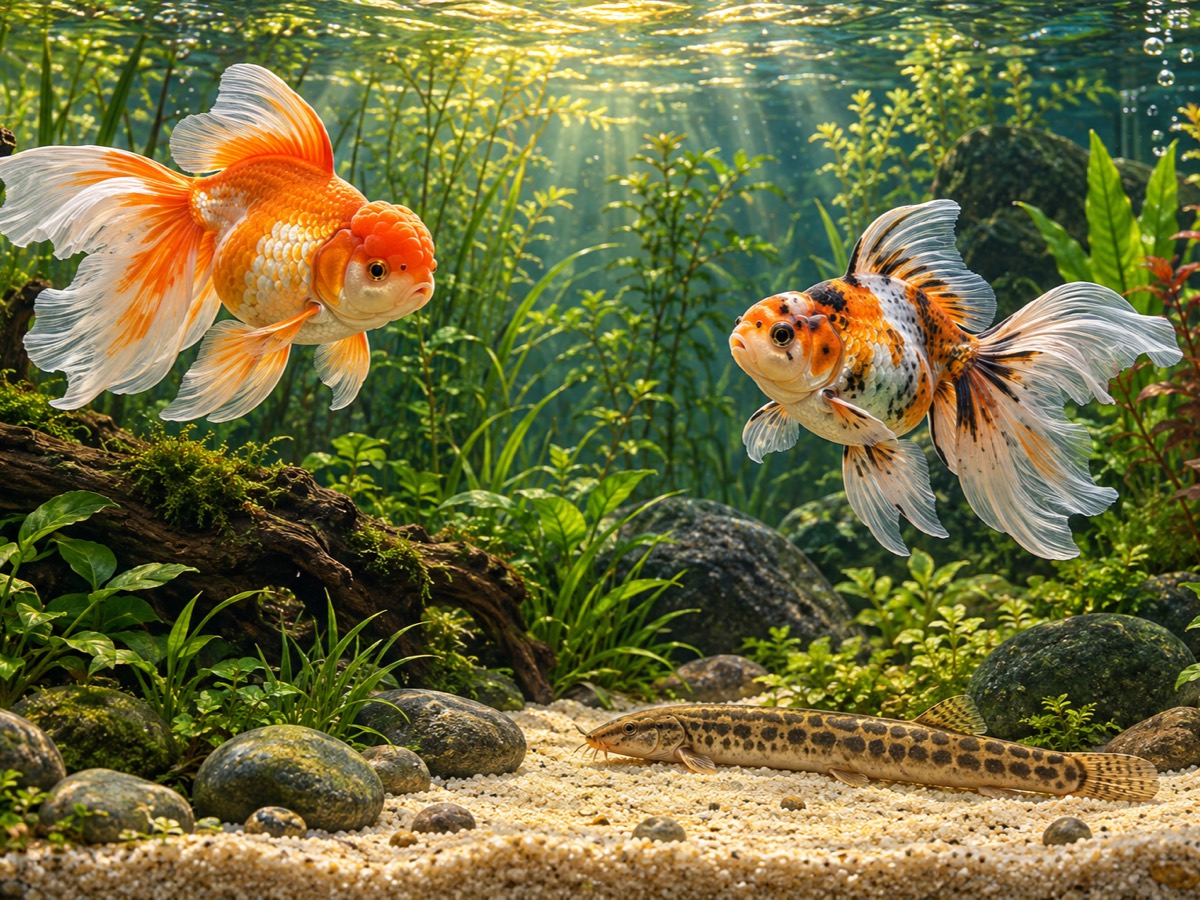

Picture a goldfish and you’ll probably picture a bowl. The image is everywhere — cartoons, carnival prizes, clip art — and it has convinced generations of well-meaning owners that a gallon of water on the kitchen counter is a perfectly good home. It isn’t. The goldfish bowl is one of the most persistent myths in pet keeping, and it quietly shortens the lives of millions of fish. Here’s why the bowl fails, what your goldfish actually needs, and how to make the upgrade without stress.
How Big Goldfish Really Get
The two-inch goldfish in the pet store cup is a baby. Common and comet goldfish — the classic single-tailed varieties — routinely reach 6 to 10 inches as adults, and exceptional fish have exceeded 18 inches and 10 pounds. Even the smaller fancy varieties, like fantails and orandas, typically grow to 6 to 8 inches, roughly the size of a softball with fins. If you’ve read our piece on captivating oranda facts, you already know these fish are far more substantial than their bowl-bound reputation suggests.
They’re long-lived, too. A well-kept goldfish commonly reaches 10 to 15 years, and documented cases stretch into several decades — one famous goldfish reportedly lived to 49. When a goldfish dies at age two, that’s not a goldfish reaching the end of its natural lifespan. That’s a goldfish that ran out of clean water.
The “They Grow to the Size of Their Tank” Myth
You’ve probably heard the reassuring version: goldfish only grow as large as their container, so a small bowl simply means a conveniently small fish. There’s a sliver of truth buried in this myth, and it’s grim. Goldfish in cramped, dirty water do often stop growing — but not because they’ve politely adapted. Stunting is a stress response driven by poor water quality, buildup of growth-inhibiting hormones in the small water volume, and chronic exposure to their own waste.
A stunted goldfish isn’t a healthy miniature. Its outward growth slows while internal problems accumulate, and stunted fish tend to develop deformities and die years or even decades ahead of schedule. In other words, the fish didn’t grow to fit the bowl — the bowl prevented the fish from growing, and shortened its life in the process.
What a Bowl Does to Water Quality
The deeper problem with a bowl isn’t just its size — it’s what’s missing. Goldfish are famously heavy waste producers, excreting more ammonia than most aquarium fish their size. Ammonia is toxic, and in an aquarium it’s handled by colonies of beneficial bacteria living in a filter, which convert it into far less harmful compounds. A typical bowl has:
- No filter, which means no established bacterial colony to neutralize ammonia — waste simply accumulates between water changes.
- Very little water volume, so every trace of waste is concentrated instead of diluted. What would be a harmless blip in a 30-gallon tank is a poisoning event in a one-gallon bowl.
- A narrow opening and small surface area, limiting the oxygen exchange a big-bodied, high-metabolism fish depends on. That classic image of a goldfish gulping at the surface is a fish struggling to breathe.
- No room to swim, forage, or turn around comfortably — goldfish are active fish that cruise constantly in adequate space.
Chronic exposure to ammonia and nitrite doesn’t just stress fish; it burns their gills and suppresses their immune system, which is why bowl-kept goldfish are so prone to fin rot, ich, and fungal infections. Many of the problems covered in our guide to preventing common goldfish diseases trace straight back to water quality — and a bowl makes good water quality nearly impossible to maintain.
The Space Your Goldfish Actually Needs
So what’s the real number? For fancy goldfish, a widely used guideline among aquarists is a 20-gallon tank for the first fish, plus about 10 gallons for each additional fish. For single-tailed commons and comets — bigger, faster, and more athletic — think 30 gallons or more per fish, and know that many keepers eventually move them to ponds, where these fish genuinely thrive and often live longest.
Those numbers can sound extravagant if you grew up with the bowl image, but they’re not arbitrary. More water gives waste room to dilute, gives oxygen room to dissolve, and gives a growing fish room to actually grow. There’s also a practical bonus that surprises new keepers: a larger, filtered tank is easier to care for than a bowl, not harder. Bowls demand constant full water changes and still stay dirty; a properly sized tank with a filter needs only a partial water change each week and stays stable in between.
Alongside space, remember that a goldfish’s size and health are also shaped by what it eats. Pairing a proper tank with good feeding habits — covered in our guide to goldfish nutritional needs — is how you get those vivid colors and flowing fins the species is famous for.
Upgrading From a Bowl Without Stress
If you have a goldfish in a bowl right now, don’t panic — and don’t rush the fix in a way that creates new problems. The biggest danger in an upgrade is moving a fish into a brand-new tank that hasn’t been cycled, where ammonia can spike just as badly as in the bowl.
Set up the new tank with a filter and water conditioner, and cycle it before the move if you can. In the meantime, protect your fish where it is: change most of the bowl’s water every day or two with temperature-matched, dechlorinated water, and feed lightly to keep waste down. When the new tank is ready, acclimate your goldfish slowly to the new water over half an hour or so, then let it settle with the lights off for a few hours.
The change you’ll see is often dramatic. Goldfish that drifted listlessly in a bowl start cruising, foraging, and begging at the glass at feeding time. Colors deepen, fins fill out, and growth resumes. Goldfish are hardy, curious, surprisingly trainable animals — they can learn feeding routines and recognize the person who feeds them — and given real space, they show it. The bowl myth sold us a decoration. The truth is much better: a proper tank buys you a genuine pet with personality to spare, and potentially fifteen years to enjoy it.