A long or double coat is a piece of equipment, not decoration. It regulates temperature, sheds water, keeps dirt off the skin and shields against sun and insects. When the weather turns cold, that equipment gets thicker and denser — and if you do not maintain it, it stops working and starts causing problems instead.
Most cold-season coat trouble comes down to two mistakes: shaving a coat that should not be shaved, and letting a thickening undercoat mat because the brushing routine did not scale up with it. Both are avoidable in a few minutes a day.
How a double coat actually works
The American Kennel Club describes a double coat as two distinct layers. The outer topcoat is made of coarse guard hairs that repel dirt and water and protect the skin from the environment. Underneath sits a soft, dense undercoat that does the insulating.
The clever part is that this system works in both directions. In cold conditions the undercoat traps warm air against the body. In hot conditions it helps hold cooler air near the skin and keeps the sun off. That is why a Husky, a Golden Retriever or a German Shepherd is not automatically better off naked in the heat — and the AKC points out that dogs cool themselves mainly by panting and a little through their paw pads, not through their skin surface.
The two layers also behave differently. The soft undercoat sheds heavily, especially during seasonal coat changes, while the coarser guard hairs shed far less. That imbalance is exactly why dead undercoat piles up and mats if nobody removes it.
Why shaving is usually the wrong answer
It is tempting. The coat looks overwhelming, the shedding is everywhere, and a clipper seems like it solves everything at once. The AKC strongly discourages shaving double-coated breeds, and the reasoning is practical rather than aesthetic.
- The two layers regrow at different rates, so what comes back is uneven and no longer functions as insulation or protection.
- Skin that has never been exposed is suddenly vulnerable to sunburn, parasites, dryness and ingrown hairs.
- You lose the weatherproofing of the guard coat, so rain and damp reach the skin directly.
- Shaving does not solve shedding. It just makes the hair shorter.
The recognized exceptions are medical: surgery, and severe matting that genuinely cannot be safely brushed out. If a coat has reached that point, a groomer or vet clipping it off is the kindest available option — pulling at tight mats is painful and can tear skin. Take that as a reset, not a routine.
Silky long-coated breeds without a dense undercoat — a Yorkshire Terrier or an Afghan Hound, for example — can be trimmed shorter without the same regrowth problem. Know which type of coat you actually have before anyone picks up clippers.
Brushing: more often, and all the way down
The single most useful change in cold months is frequency. General guidance for long and double coats is combing two to three times a week, and during a heavy coat change you will want to do it more.
The commonest mistake is brushing only the top. A slicker over the surface makes the coat look tidy while a felted layer builds against the skin. Work in sections, lifting the hair and brushing from the skin outwards so you can see the parting as you go.
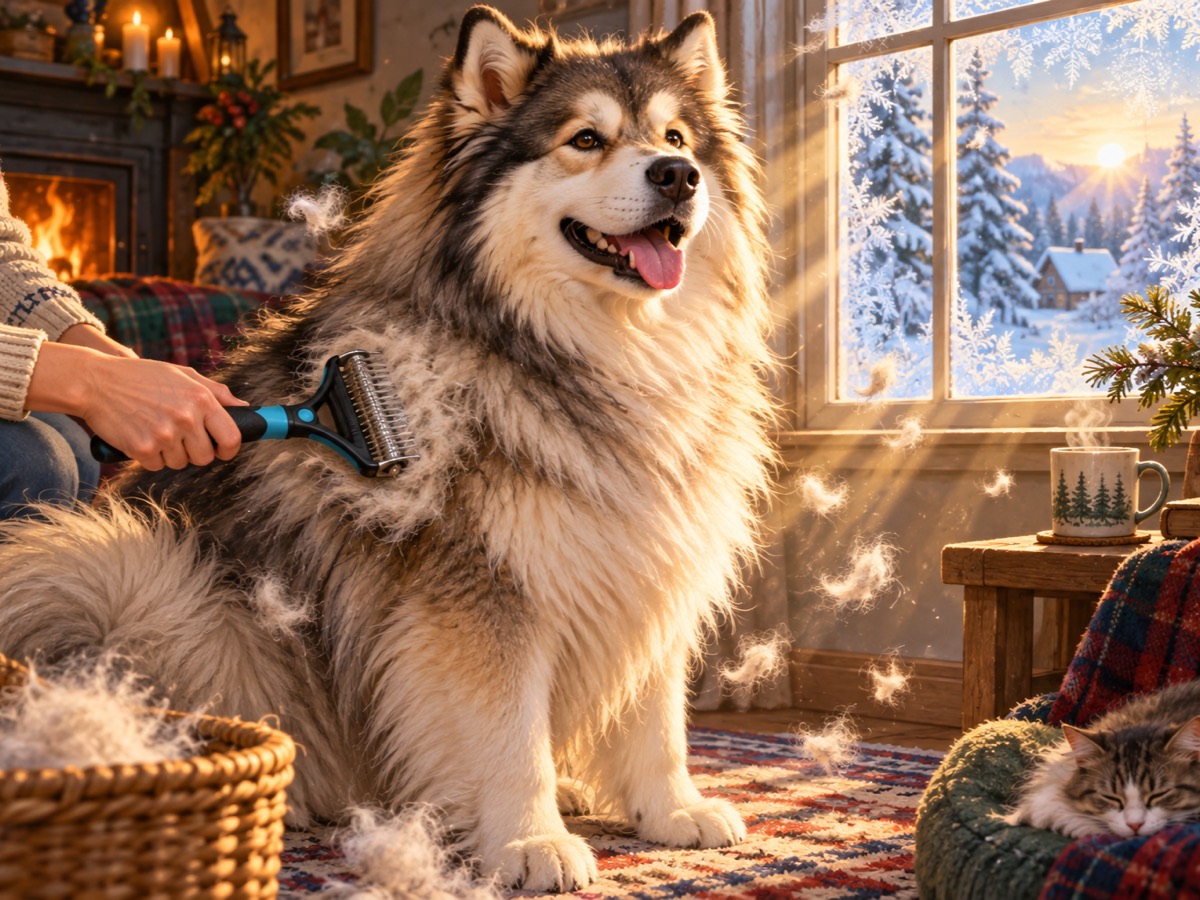
- An undercoat rake pulls dead undercoat out without damaging the guard hairs. It is the tool that does the real work on a double coat.
- A slicker brush lifts and finishes; a steel comb is your test — if a comb passes cleanly from skin to tip everywhere, you are done.
- Avoid combs with bent or damaged teeth, which snag and break coat.
- Never brush a heavily matted coat dry and hard. You are pulling on skin, and your dog will remember it.
- Keep sessions short and pleasant, with treats and breaks. A dog who enjoys grooming is a dog you can groom for the next twelve years.
Our guide to grooming long-haired breeds covers technique in more depth, and why regular grooming matters explains the health checks you get for free while you work.
Where mats form, and what to do about one
Mats are not random. They form where hair moves against itself or against something else, and where you are least likely to look.
- Behind and inside the ears
- Under a collar or harness, especially one worn all day
- Armpits and the fold where the back legs meet the body
- The trousers at the back of the thighs, the tail base and the belly
- Between the toes and around the pads
A mat traps moisture and debris against skin, which leads to odor, irritation and sometimes hot spots or infection underneath. If you find a small one, hold the hair firmly at its base so the tension is on your hand and not the skin, then tease it apart from the outer edge inwards with your fingers and a comb, in small pieces. Never cut a mat out with scissors — matted hair sits tight against skin, and this is one of the most common ways owners cause a wound that needs stitches. If a mat is large, tight, or close to skin, book a groomer.
Paws, damp and the parts people forget
Hair between the pads collects whatever the ground is offering. In snow and ice it packs into hard balls that hurt to walk on; in wet weather it holds mud and grit; in dry, dusty months it traps sand and fine debris. Keep it trimmed level with the pads — this improves traction and cuts buildup — and check the webbing between the toes after outings.
Road salt and de-icing chemicals irritate pads and are not something you want licked off, so rinse or wipe paws after walks where they are used. In dry seasons the problem flips: pads and nose crack from low humidity, and heated indoor air makes it worse.
Damp is the underrated enemy. A thick coat holds water for a long time, and a dog left to dry slowly with wet undercoat is a dog with a warm, damp layer against the skin — ideal conditions for irritation. Towel thoroughly after wet walks and pay attention to the chest, belly and legs.
Bathing, drying and when to ask for help
Bathe less often in cold months than you would in summer, and use a gentle, moisturizing shampoo made for dogs rather than anything from your own shower. Over-washing strips the oils that keep skin comfortable and the coat weather-resistant. Ask your vet what suits your particular dog, especially if there is any existing skin condition.
Two rules make baths safe in cold weather. Always brush the coat out completely before it gets wet, because water turns loose tangles into set mats. And dry all the way to the skin afterwards, with towels and a dryer on a cool or warm setting, not hot. A double coat that feels dry on top is often still wet underneath.
Call your vet rather than experimenting if you see persistent itching, redness, bald patches, an unusual smell, or cracked and bleeding pads. Those are skin problems, not grooming problems, and they need a diagnosis. For the wider seasonal picture, our guide to adapting your pet’s routine across the seasons covers what else changes when the weather does.