Paws take more punishment than any other part of your dog, and they take most of it in the months when the ground changes. Cold, hard surfaces, grit, salt, and dry air all work on the same small patch of skin at once. The damage builds quietly — a dog who has been limping for three days usually started with something you could have spotted on day one.
Here is what actually goes wrong when the weather turns, and the short routine that prevents most of it.
What cold ground does to a pad
A healthy paw pad is thick, slightly rough, and flexible. Three things in cold conditions take away the flexibility.
The first is simple physics. Frozen ground and icy crust are hard and sharp in a way that soft soil never is. The AVMA points out that ice and the crust on top of snow can cut paws outright, and that they hide objects a dog would otherwise have stepped around. A pad that gets nicked on frozen gravel will keep getting nicked in the same spot on every subsequent walk.
The second is ice between the toes. Any dog with hair growing between the pads will collect snow and slush there, and it balls up and freezes into hard lumps that press on the webbing. This is where longer-coated breeds suffer most, and it is the easiest problem to fix: keep the hair between the toes trimmed level with the pads. Our guide to winter coat care for long-haired breeds covers the rest of that grooming job.
The third is moisture loss. Pads dry out, lose their give, and then split — and this is the part that catches people out, because it has nothing to do with temperature. A dog walking on hot, dusty ground in the dry season gets exactly the same cracked pads as a dog walking on frozen pavement. If you are in a place where the dry, dusty months arrive instead of a freeze, the paw problems are the same even though the cause is different; our piece on keeping pets safe during harmattan season covers the wider picture there.
Salt and ice melt: the risk is the licking
Where roads and walkways get treated, de-icing products are the single biggest paw hazard of the season — and the way they cause trouble is not the way most owners assume.
The ASPCA Animal Poison Control Center reports that most of its ice-melt calls are about pets licking their feet after walking through a treated area, rather than eating the product directly. Ice melts are commonly based on sodium chloride, but potassium chloride, calcium chloride, and magnesium chloride all turn up too. On skin, those salts irritate the pads and the webbing between the toes; you will see redness, swelling, and a dog who will not leave their feet alone. Swallowed in quantity, they can cause anything from an upset stomach and vomiting through to neurologic signs — trouble walking, muscle tremors, or seizures.
A few things actually reduce the exposure:
- On your own property, use only products labeled pet friendly, apply the recommended amount rather than a generous scoop, and shovel up the slush and residue once the ice has melted — that is explicit AVMA advice.
- Store the bag somewhere your pet cannot reach. The ASPCA is clear that pet-friendly formulas can still cause problems if enough is eaten.
- Sand or cat litter gives traction without any chemistry. It will not melt ice, but on steps and a short path that is often all you need.
- Watch your dog on treated ground and interrupt any attempt to lick salt off the pavement.
- Route walks along untreated grass or dirt where you have the choice. This is the most effective change available to most owners and it costs nothing.
Antifreeze is the one that kills
De-icers irritate. Antifreeze is in a different category entirely, and it belongs in any conversation about cold-weather ground because the puddles end up exactly where paws go.
Most conventional antifreeze contains ethylene glycol, which the ASPCA describes as highly toxic, attacking the nervous system and the kidneys. It also tastes sweet, so pets drink it willingly, and small amounts can be enough to cause serious harm. Interestingly, ASPCA case data show ethylene glycol calls running fairly steadily all year rather than only in winter, with a small spike in December — so this is not purely a cold-season problem.
Keep your pet away from any puddle or wet patch near a parked car, and store containers sealed and out of reach. Formulations based on propylene glycol have a considerably wider margin of safety, and are the better choice if you keep any in the house — though the ASPCA still advises keeping pets away from all of it, pet-safe label or not.
If you think your pet has swallowed any amount of ethylene glycol, this is not a wait-and-see situation. Call your veterinarian immediately, or the ASPCA Animal Poison Control Center at 888-426-4435, and be ready to go in. Do not try to treat it at home and do not make your pet vomit unless a vet or poison control professional on the phone tells you to.
The ninety-second routine after every walk
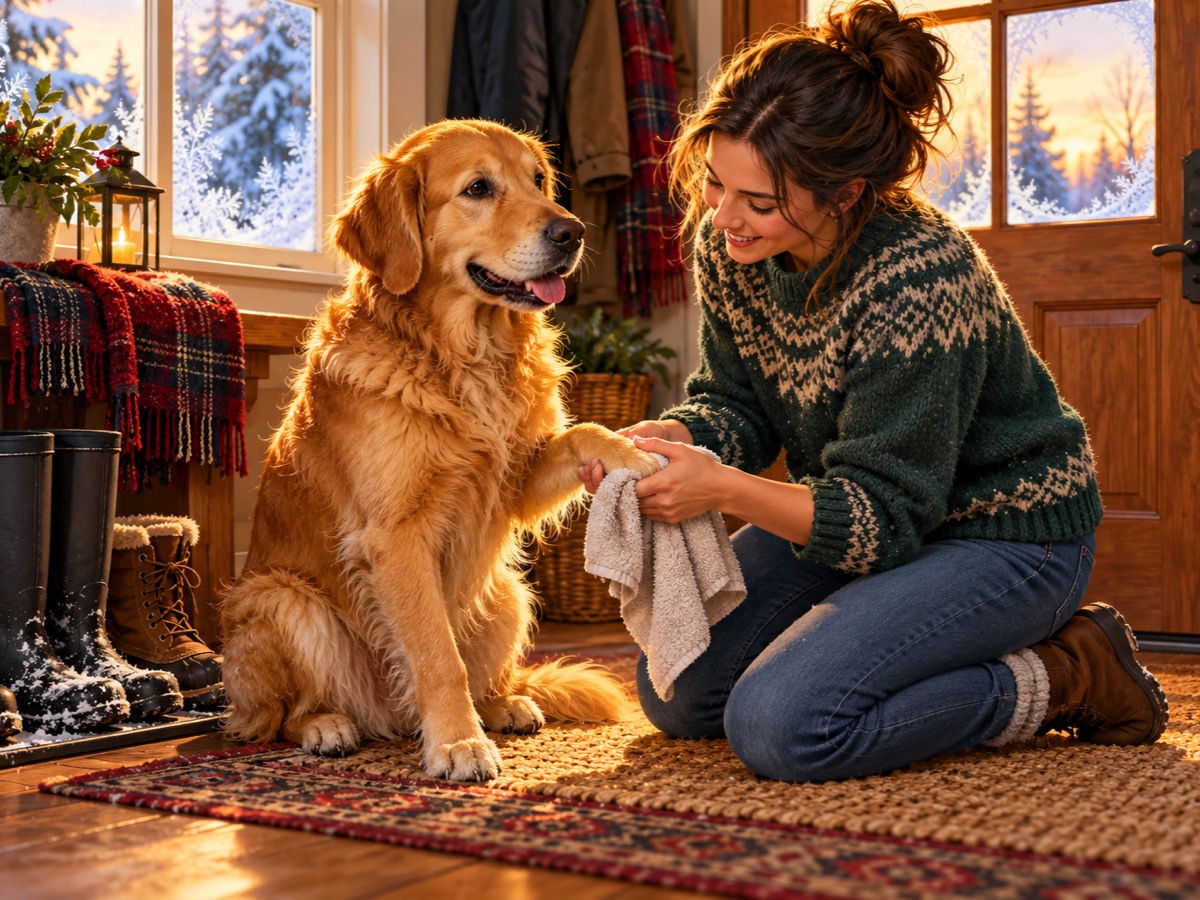
Almost everything in this article is prevented by one habit: deal with the feet the moment you get back inside, before your dog settles and starts grooming.
- Wipe each paw with a damp cloth, or rinse in lukewarm water and dry. This removes salt and chemical residue before it can be licked off, which is the whole point. Keep a cloth by the door so it takes no decision-making.
- Get between the toes. That is where grit lodges and where salt sits longest.
- Look at the pads under decent light. You are checking for splits, a raw patch, embedded grit, or a torn nail.
- Feel for ice balls in the webbing and melt them with warm — not hot — water rather than pulling them out.
- Check the nails. Overlong nails change how the foot lands and make slipping on hard ground more likely.
For dogs who tolerate them, boots are the most complete solution, because they stop both the cutting and the chemical exposure. Most dogs need a week or two of short indoor sessions with treats before they will walk normally in them — introduce them gradually and reward calm feet rather than forcing the issue. Wax-based pad balms containing petrolatum or lanolin are the alternative, and they do help with cracking and ice buildup, but ask your vet which product suits your dog rather than guessing from the packaging.
When to stop managing it yourself
A minor crack that is dry and closed is a home job: keep it clean, keep walks short and off rough ground, and use a balm your vet has approved. Most of those settle in a week.
Book a vet appointment instead if the pad is bleeding or has a flap of loose tissue, if there is swelling or heat in the foot, if you see pus or smell anything foul, if your dog will not bear weight on the leg, or if persistent licking has turned the skin between the toes red and sore. Those need looking at — a pad injury that gets infected takes far longer to heal than one treated early. Our pet first aid guide covers how to clean and cover a paw wound well enough to get to the clinic.
Remember too that short coats, small body size, and very young or very old animals all lose heat faster, and no pet should be outside for extended periods when it is below freezing no matter how good their feet are. Adjust the length of the walk, not just the gear.