Somewhere in your local shelter, there’s probably a cat with a note on her kennel that scares most adopters away: FeLV positive. She may be young, playful, and perfectly healthy today. But those two letters mean she’ll wait longer than almost any other cat in the building, and in some shelters she won’t get the chance to wait at all.
If you’ve wondered whether adopting an FeLV-positive cat is a wise choice or an act of heartbreak, here’s the honest picture: it’s a real commitment with a shorter horizon than most adoptions, and it’s also one of the most meaningful things a cat lover can do. What it is not, despite the old reputation, is an automatic tragedy.
What FeLV actually is (and isn’t)
Feline leukemia virus is a retrovirus that weakens a cat’s immune system and can lead to secondary infections, anemia, and certain cancers. According to the Cornell Feline Health Center, roughly 2 to 3 percent of cats in the United States carry the virus, with higher rates among cats that are sick or at high risk. We’ve covered the disease in depth in our complete guide to feline leukemia, but the essentials matter here.
First: FeLV infects only cats. It poses no risk to you, your children, your dog, or any other non-feline pet. Second, the virus is fragile. It spreads through prolonged close contact between cats, mainly via saliva and nasal secretions during mutual grooming, bite wounds, and, less commonly, shared food bowls and litter boxes, and it survives only a short time outside a cat’s body, likely just hours under normal household conditions. You will not carry it home to a healthy cat on your clothes in any meaningful way, though washing hands between handling cats is still sensible.
Third: a positive test is not a uniform sentence. Some cats develop what veterinarians call a progressive infection and remain persistently infected, while others mount an immune response that suppresses the virus, a regressive infection, and may never show illness from it. Testing usually involves an in-clinic ELISA blood test, sometimes followed by a confirmatory lab test. If you adopt an FeLV-positive cat, your vet may recommend retesting to clarify her status.
The honest question: how long will she live?
There’s no dodging this one. On average, cats with progressive FeLV infections live shorter lives than uninfected cats, and averages from veterinary sources are often measured in a few years after diagnosis. But averages hide enormous variation. Many FeLV-positive cats live several good years, some considerably longer, and rescue organizations like Best Friends Animal Society, which has cared for FeLV cats for decades, push back hard on the idea that a positive test means euthanasia; they point out that infected cats can remain healthy for months or years before the virus causes illness, and describe FeLV cats who lived well into old age.
The realistic framing is this: you are adopting a cat whose future is less certain, and whose healthy years are worth exactly as much to her as any cat’s. Adopters of FeLV-positive cats consistently say the same thing adopters of senior pets do: knowing time may be shorter changes nothing about the quality of the bond, and everything about how little you take for granted.
The household question: other cats
This is the biggest practical constraint, so settle it before you fall in love. Because FeLV spreads between cats through close daily contact, an FeLV-positive cat should live as an only cat, or with other FeLV-positive cats. Cornell’s guidance is direct: infected and uninfected cats should be kept separated to eliminate transmission risk. Sharing a home with dogs, rabbits, or other species is no problem at all.
If you already have a healthy cat, this usually isn’t the adoption for you unless you can genuinely maintain permanent separation, which is harder than it sounds. There is a vaccine for cats at risk of exposure, and it matters, but it is not considered fully protective in every cat, so vaccination alone isn’t a green light to mix positive and negative cats. Our article on FeLV vaccination explains who should get it and why.
Caring for an FeLV-positive cat, day to day
Here’s the pleasant surprise: daily life with a healthy FeLV-positive cat looks almost exactly like life with any cat. The differences are a matter of vigilance, not labor. The core commitments:
- Keep her strictly indoors, which protects her weakened immune system from infections and parasites and protects outdoor cats from her
- See the vet more often; many veterinarians recommend checkups roughly every six months for FeLV-positive cats, with regular weight checks, dental attention, and bloodwork as advised
- Feed a complete, balanced commercial diet, and skip raw food, since immunocompromised cats are more vulnerable to foodborne bacteria and parasites
- Stay current on parasite prevention and the vaccines your vet recommends
- Spay or neuter, which most shelters will have done already
- Keep stress low with a stable routine, since stress works against an already-taxed immune system
The single most important habit is acting fast when something seems off. In an FeLV-positive cat, a minor upper respiratory sniffle, gum inflammation, or a few days of poor appetite deserves a vet call rather than a wait-and-see. Learn the warning signs, our guide to FeLV symptoms and early detection walks through them, because early treatment of secondary problems is where you win back quality time. And when illness does come, there is real supportive care available; see our overview of treatment options and supportive care for FeLV.
Is this adoption right for you?
An FeLV-positive cat is a good match if you have no other cats or are open to adopting a bonded FeLV-positive pair, if you can absorb somewhat higher veterinary costs and more frequent visits, and if you can accept uncertainty without letting it steal the joy of the good days. It’s the wrong match if you’d spend every day braced for loss, and that’s okay to admit.
Ask the shelter or rescue what they know about the cat’s history, when she tested positive, whether the result was confirmed, and what health issues, if any, she’s shown. Adoptions complete directly with the rescue that has her in care, and many groups that adopt out FeLV-positive cats reduce fees and offer ongoing guidance, because they want these adoptions to succeed. For a fuller picture of the road ahead, read our companion piece on living with a cat diagnosed with feline leukemia.
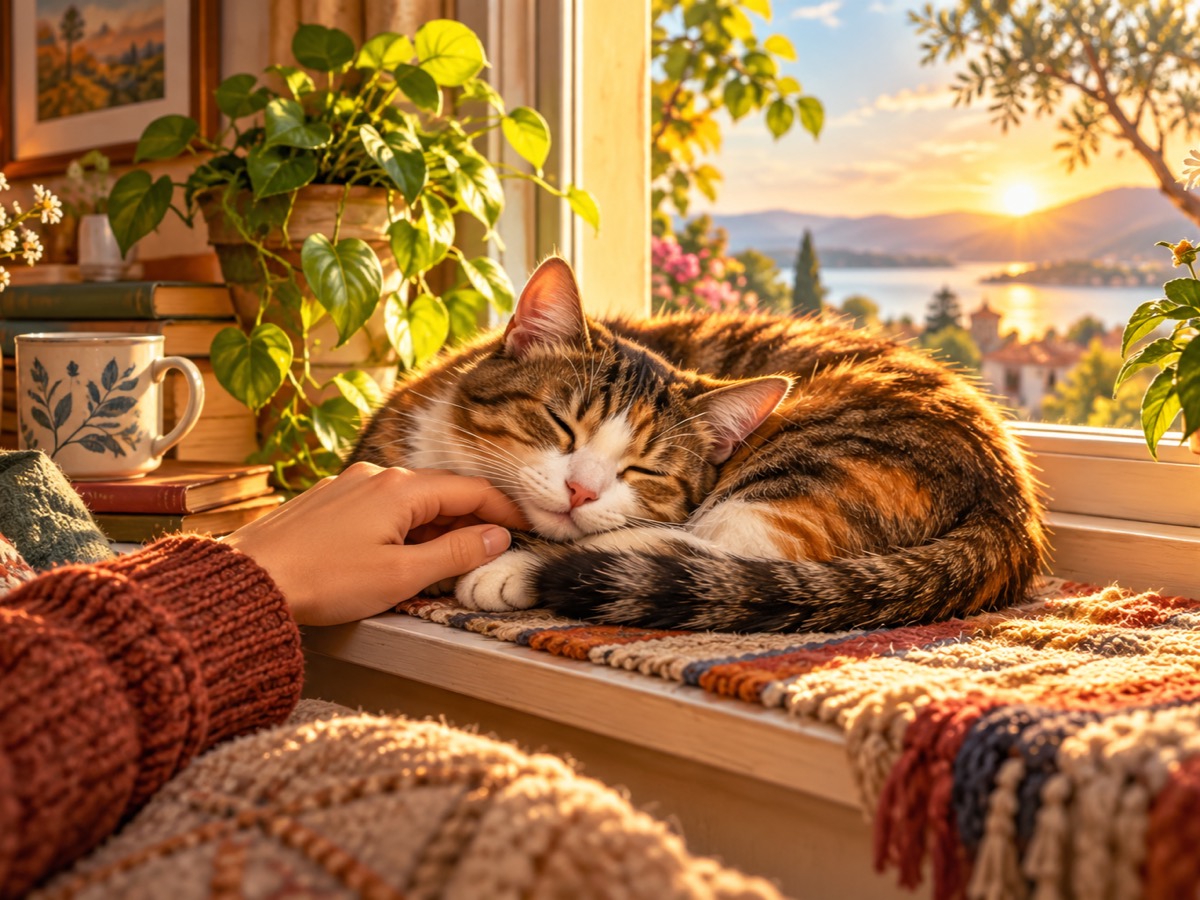
The cat behind that scary kennel card doesn’t know she has a virus. She knows she wants a sunny windowsill, a warm lap, and a person. Give her those, and however long you get, you’ll have given a cat the whole point of being a cat.