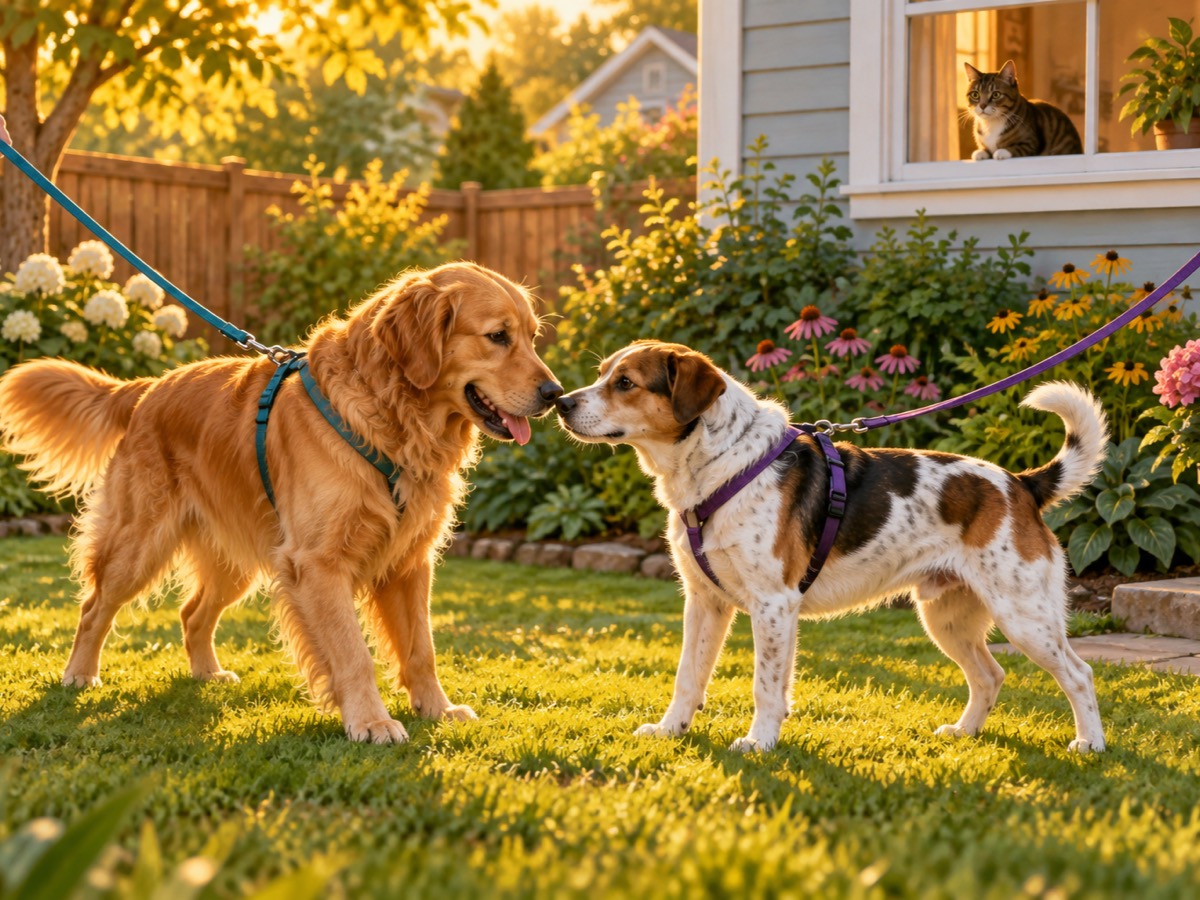
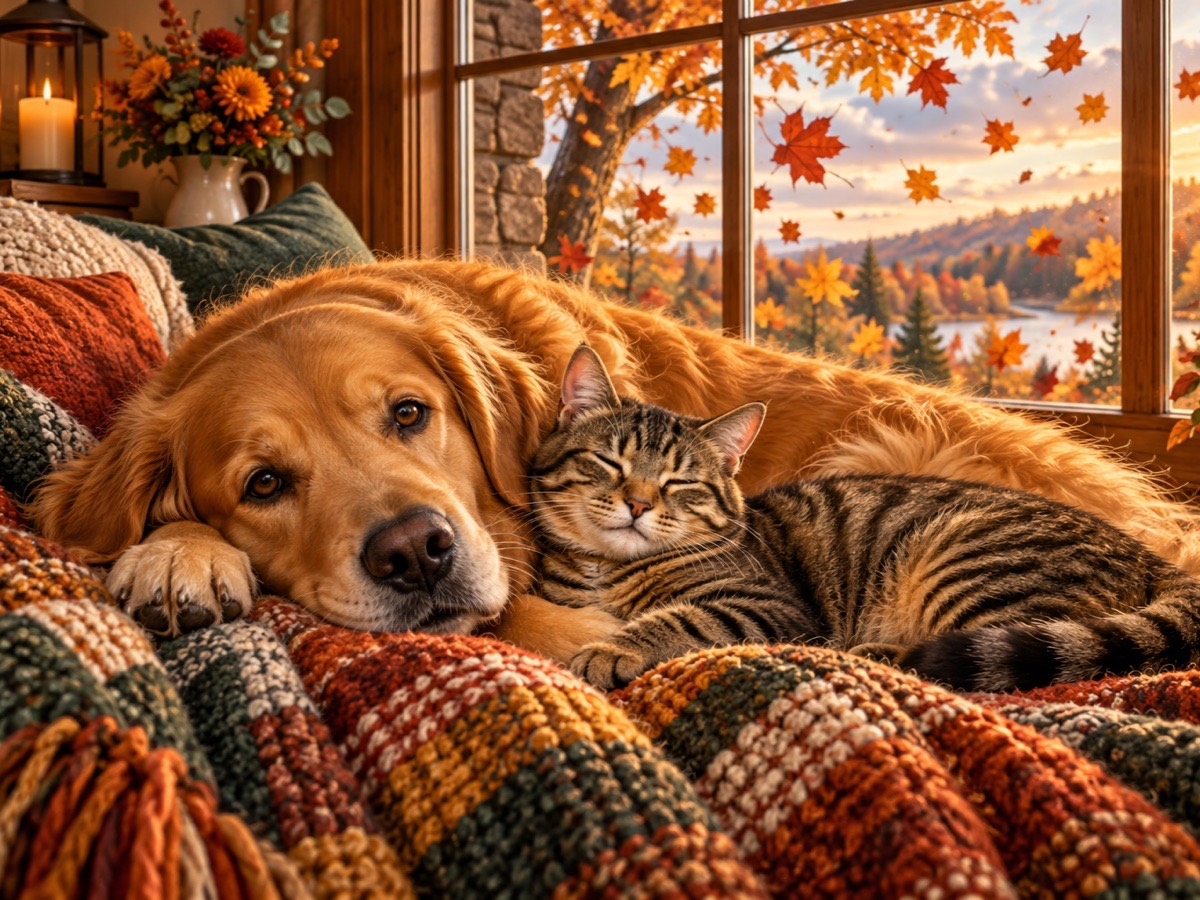
The turn from hot months into cool ones is one of the biggest environmental shifts your pet goes through all year, and most of it happens without you noticing. The air dries out or dampens, daylight shortens, insects change their patterns, and the things people store in garages and gardens change too. Dogs and cats adapt, but they adapt on a delay — and the gap between the weather changing and their routine changing is where most autumn problems live.
Wherever you are, the trigger is the same: the weather turns. In temperate regions that means falling leaves, damp mornings, and antifreeze appearing in garages. In much of West Africa it means the rains easing off and the dry, dusty months rolling in. Different scenery, same principle — your pet’s routine was tuned for the season that just ended.
Stiff joints are usually the first sign
If your dog or cat is going to tell you the season changed, they will tell you with their body. Cooler, damper conditions tend to make older or arthritic joints more uncomfortable, and the change often shows up as behavior rather than obvious limping.
Watch for a pet who hesitates before jumping onto the sofa, takes the stairs one at a time, needs a longer warm-up on the first few minutes of a walk, or simply sleeps in a different spot. Cats are especially good at hiding this — a cat who stops using a high perch has often stopped because it hurts, not because they lost interest.
Practical fixes are simple. Give older pets a thicker, warmer bed away from drafts and off cold tile. Add a step or ramp to a favorite perch. Keep walks regular rather than sporadic, because a stiff dog does worse with one long weekend hike than with steady daily movement. If the slowdown is real, bring it up with your vet rather than guessing — there are genuine options for pain management, and none of them are things you should improvise at home. Human painkillers in particular are dangerous to dogs and cats. Our guide to age-related issues in senior dogs goes deeper on what is normal ageing and what deserves a visit.
The seasonal poisons that appear when it cools
Autumn has a specific hazard profile, and it is not the same one as summer. The ASPCA flags several that reliably spike as temperatures fall.
- Rodent poisons. Rats and mice move indoors when it gets cold, so households put out bait — and rodenticides are highly toxic to pets, sometimes fatally so. A pet can also be poisoned by eating a rodent that ate the bait. If you must use bait, it needs to be in a place your animal genuinely cannot reach, and you should know which product was used in case you ever need to tell a vet.
- Engine coolant and antifreeze. Ethylene glycol-based coolant is highly toxic and tastes sweet, so spills get licked up. Clean any spill immediately, store containers sealed and out of reach, and consider propylene glycol-based products, which the ASPCA notes are less dangerous.
- Mushrooms. Around 99% of mushrooms are harmless, but the remaining 1% can be life-threatening, and telling them apart in a damp garden is not realistic for most of us. Treat any mushroom patch as off-limits and clear them when they appear.
- School supplies. Glue sticks, markers and pencils are low-toxicity but very chewable, and they cause stomach upset and, occasionally, blockages. Backpacks left on the floor are a classic culprit.
- Snakes. As temperatures drop, snakes become more active preparing to overwinter, which raises the odds of a bad encounter on a walk. Learn which venomous species live in your area and avoid the habitat they favour.
Coat, skin and paws in changing air
Many dogs and cats shed heavily as the seasons flip, swapping a lighter coat for a denser one. That loose undercoat has to go somewhere, and if you do not brush it out it mats — especially behind the ears, under the collar, in the armpits and around the back legs. Matted coat traps damp against skin and sets up irritation.
Step up brushing during the transition rather than waiting until you find a mat. A few minutes daily beats an hour-long battle later, and it gives you a weekly hands-on check for lumps, ticks and sore spots.
Paws deserve attention too. Wet leaf litter, mud, grit and dust all collect between the toes. Wipe paws after outings and check the webbing for packed debris or cracks. In dry, dusty months the opposite problem appears — pads and nose leather dry out and crack, and dust irritates eyes and airways. Readers in dust-prone regions will find more on that in our piece on keeping pets safe during harmattan season.
Parasites do not stop at the first cold snap
One of the most common autumn mistakes is dropping flea, tick and worming prevention because the weather cooled off. Fleas move indoors with the heating on and can keep cycling all winter. Ticks stay active in mild spells and in leaf litter. Mosquitoes persist far later in the year than most people assume.
Keep prevention running year-round unless your vet has told you otherwise for your specific climate. If you are going to change anything, change it deliberately after a conversation, not by forgetting a dose.
Shorter days, less movement, more mischief
When it gets dark early and the weather is unpleasant, walks get shorter and play gets skipped. The energy does not disappear — it turns into chewing, pacing, barking, or a cat who wants a wrestling match at 3am.
- Shift exercise to whatever part of the day has the best light and weather rather than cutting it.
- Swap some physical exercise for mental work — scatter feeding, food puzzles, short training sessions, or hiding treats around a room. Ten minutes of sniffing and problem-solving tires a dog more than you would expect.
- Use reflective gear or a light on the collar if walks now happen in the dark.
- Adjust food if activity genuinely drops for weeks. Weight creeps on quietly in low-activity seasons, and it is much easier to prevent than reverse.
Cats need this too. An indoor cat whose window-watching gets less interesting as the garden empties out will find its own entertainment, usually at your expense. Our guide to indoor cat enrichment has ideas that cost nothing.
If you think your pet has eaten something toxic
Do not wait for symptoms, and do not try to treat it yourself. With antifreeze and rodenticides in particular, the damage is well underway before an animal looks unwell, and early treatment changes outcomes enormously.
- Call your vet, your nearest emergency clinic, or an animal poison control service immediately. In the United States the ASPCA Animal Poison Control Center runs a 24/7 line on (888) 426-4435; a consultation fee may apply.
- Bring the packaging or a photo of it. The active ingredient decides the treatment.
- Note roughly how much and how long ago, and describe your pet’s size and any existing conditions.
- Never make your pet vomit unless a vet or poison control specialist tells you to. For some substances it makes things considerably worse.
Seasonal care is really just a scheduled recheck. Twice a year, walk your home and garden with fresh eyes, adjust the bedding, the exercise plan and the grooming routine to match the weather in front of you, and book the check-up you have been putting off. Half an hour of that in the first cool week saves you a great deal of worry later.