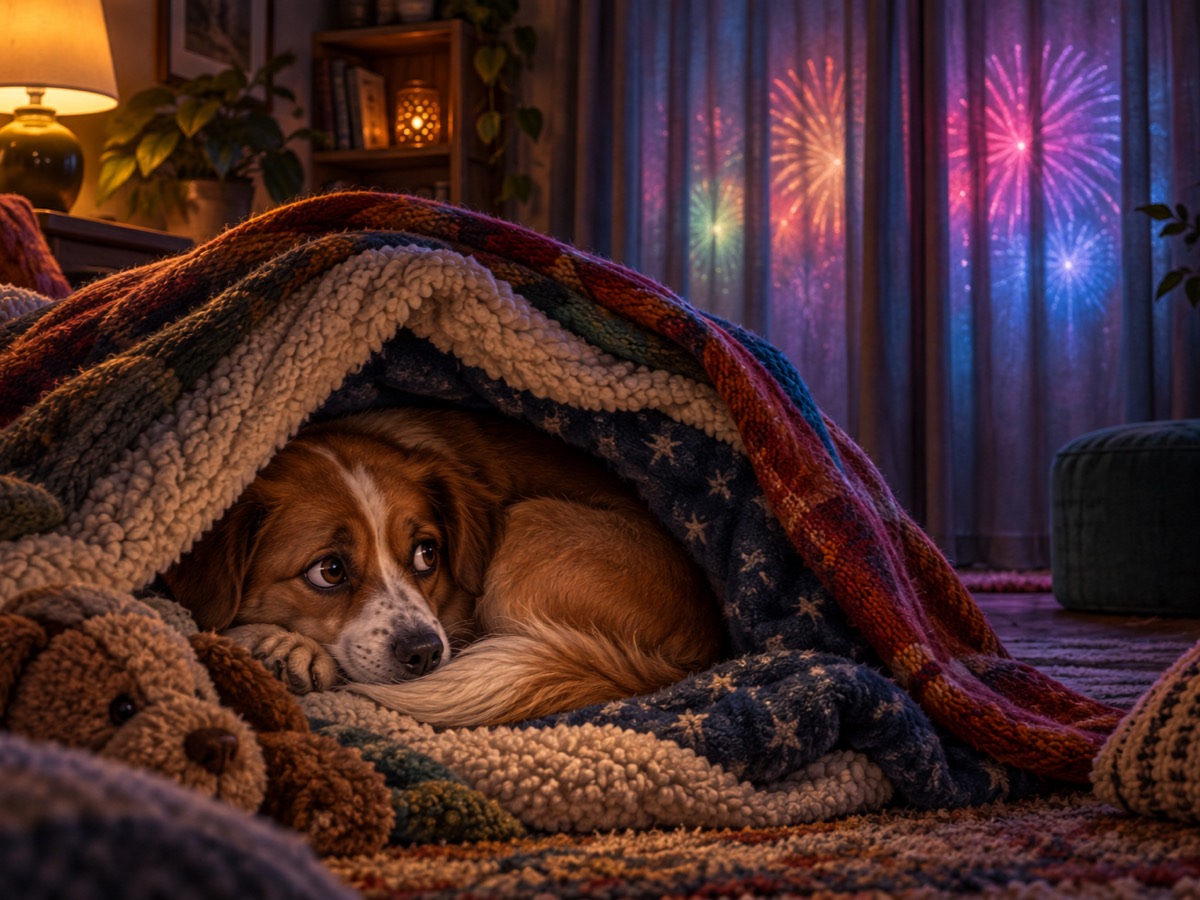
Loud, unpredictable noise is one of the few things that can turn a settled, confident animal into a panicking one in seconds. Fireworks arrive with festivals, weddings and new year celebrations. Thunderstorms roll in with the rainy season. Neither one gives your pet any warning, and neither one can be reasoned with.
Noise fear is common, and it tends to get worse over the years rather than better if nothing is done. The useful news is that almost everything that helps is free, and most of it is preparation you do on a calm ordinary day rather than heroics in the middle of the bang.
What fear actually looks like
People miss noise fear because they are looking for cowering and shaking. The early signs are quieter, and catching them matters — a mildly worried animal is far easier to help than a fully panicked one.
- Pacing, restlessness, or an inability to settle in the usual spot
- Panting when it is not hot, drooling, lip licking, repeated yawning
- Ears pinned back, tail tucked, body lowered, whale eye where you see the whites
- Clinginess, or the opposite — hiding under beds, behind toilets, or in cupboards
- Refusing food they would normally take instantly, which is one of the clearest stress readouts
Cats usually vanish rather than perform. A cat who bolts under the bed and stays there for six hours, with dilated pupils and a flat, tense body, is just as frightened as the dog shredding the doormat. Our guide to reading dog body language covers many of the early signals in more detail.
Build the safe place before you need it
Every frightened animal wants the same thing: somewhere small, dark and enclosed where the noise is muffled. Your job is to build that in advance and make it genuinely pleasant, so it is already a good place by the time it is needed.
- Choose the most insulated part of your home — an interior room, a hallway or a bathroom with few windows. Put familiar bedding in it, and give cats a covered bed or a box on its side. Never pull a hiding cat out.
- Close windows and doors and draw curtains or blinds. This cuts both the sound and the flashes, which matter more than people expect.
- Add steady background sound. A fan, an air conditioner, calm music or a television at normal volume masks the sharp peaks that trigger the startle rather than the general rumble.
- Leave the door to the safe space open. Never shut a panicking animal in, because dogs and cats can injure themselves badly trying to escape confinement.
A crate can be an excellent refuge, but only for a dog who already loves the crate and only with the door left open. If your dog has no crate history, this is not the week to start — build it slowly and positively instead, the way we describe in crate training without tears.
What to do while it is happening
On the night itself, the goal is to lower the intensity and get through it without adding new bad associations.
- Bring pets indoors early, well before the first bang, and exercise and feed them earlier in the day. An animal already outside when it starts is the one who bolts.
- Act normally. Your pet reads your posture and voice, and a household that carries on quietly as usual is reassuring.
- Offer something to chew or lick. If they refuse, they are past the point where food works, so stop offering and let them hide.
- Never punish or scold fear. It does not reduce the fear and it adds you to the list of bad things happening.
- Never force an animal to face the noise to “get used to it”. Flooding a frightened animal makes phobia worse.
One myth worth putting down: comforting a frightened pet does not reinforce fear. Fear is an emotion, not a trick performed for a reward, and you cannot make a dog more afraid of thunder by stroking them. If your dog wants to lean on you, let them. Calm petting and steady contact help. What is genuinely unhelpful is anxious fussing, sharp voices, and repeatedly checking whether they are still scared.
Escape is the real physical danger
More pets go missing around major fireworks nights than at almost any other time of year. A panicked animal will scale a fence it has never touched, squeeze through a gap you did not know existed, or burst past a guest at the front door and run until it is lost and far from home.
- Check the boundary of any outdoor space in daylight: gaps, loose panels, gates that do not latch, hollows dug under a fence line. Warn guests to close doors behind them.
- Make sure collar tags are readable and that the phone number on your pet’s microchip registration is the one you actually use. Keep a recent photo on your phone.
- If a pet does escape, search close to home first and quietly. Frightened animals often freeze in cover nearby rather than keep running.
The training that actually changes things
Management gets you through one night. Changing how your pet feels about noise takes desensitization and counterconditioning, which veterinary behavior sources consider the core treatment for sound fear. It is slow, and it must be done in the quiet weeks between events.
The method, in outline: first teach your dog to relax on a mat or bed on cue, rewarding calm with treats and gentle praise. Then introduce a recording of thunder or fireworks at a volume so low it is barely perceptible, while your dog stays relaxed and gets rewarded. Increase the volume only when they remain genuinely relaxed at the current level, over sessions spread across weeks. VCA Animal Hospitals suggests sessions of roughly thirty to forty-five minutes, ideally daily, and playing recordings at full volume at least weekly afterwards to maintain the progress.
Two things sink this program. Going too fast is one — if your dog tenses, stops eating or leaves, you have gone up too quickly and should drop back to the last easy level. The other is accidental full-volume exposure during a real storm before training is finished, which can undo weeks of work. Real storms also bring darkening skies, rain, pressure changes and flashes, so a dog who is fine with a recording may still struggle with the real thing.
Everything here is positive-reinforcement work. There is no place for shouting, shock devices or forced exposure in treating a fear problem, and a good trainer or veterinary behaviorist will not use them. If your pet’s fear also flares when you leave the house, read our guide to separation anxiety — the two often travel together.
When to bring in your vet
Severe noise phobia is a medical and welfare problem, not a personality quirk, and it deserves professional input. Book an appointment if your pet injures themselves, destroys doors or windows trying to escape, will not eat or drink for hours afterwards, or if the fear is spreading to new triggers such as rain, wind or ordinary household bangs.
Your vet can rule out pain or illness that may be lowering your pet’s tolerance, and can discuss options from pheromone products through to prescription medication for high-risk seasons. Anything given ahead of an event usually needs to be on board well before the noise starts, so plan it days in advance rather than reaching for something mid-panic. Never give your pet human sedatives or leftover medication of any kind — dosing and drug choice for animals are genuinely different, and getting it wrong is dangerous. Ask early, in a calm week, and you will have a plan ready before the next storm season.