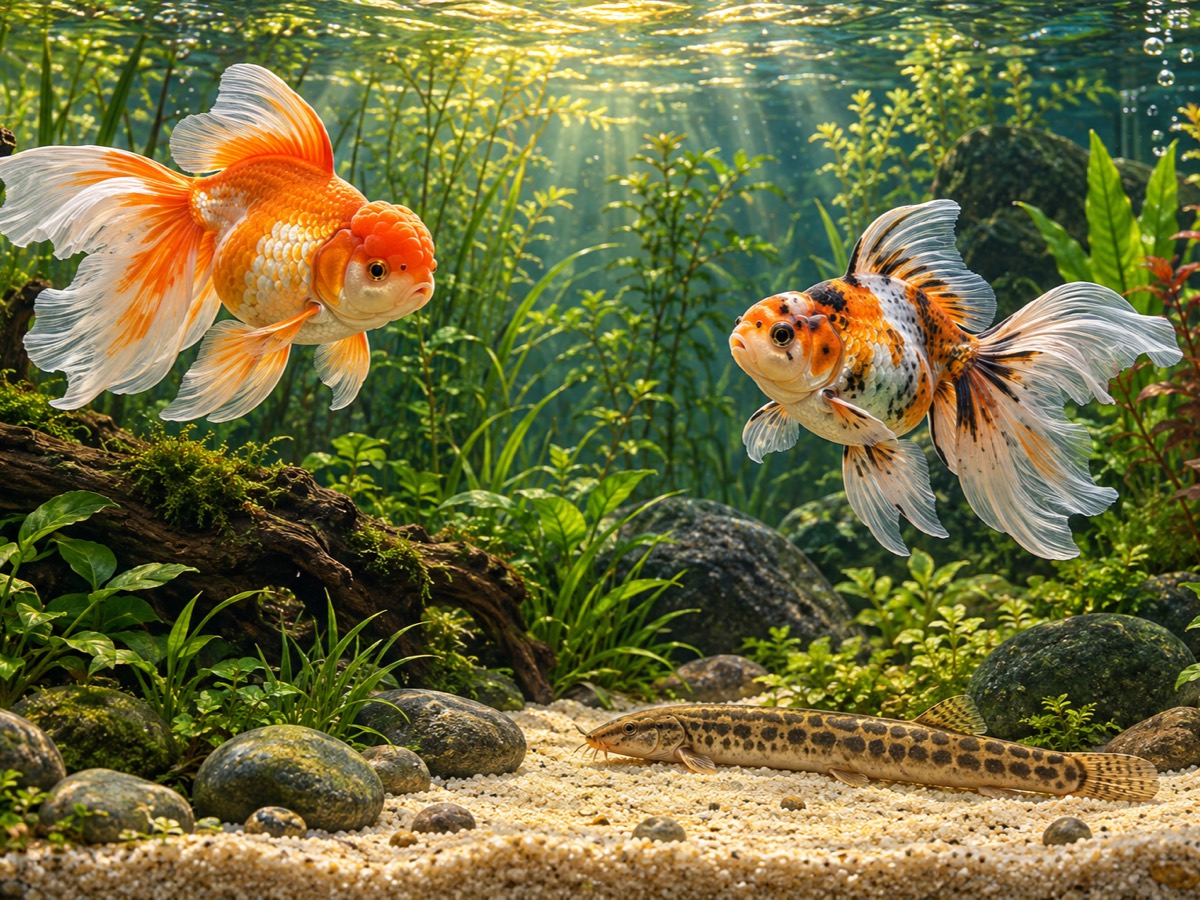
Ask most people how long a goldfish lives and you will hear something between a few months and a couple of years. Ask Guinness World Records and you get a different answer: 43 years. That gap between what people expect and what the animal is actually capable of is the whole story of goldfish keeping.
Goldfish are not disposable. They are a decades-long commitment kept, far too often, in conditions that make a decades-long life impossible. Understanding where the real ceiling sits, and what pulls fish so far below it, changes how you set up a tank.
The record, and what it tells you
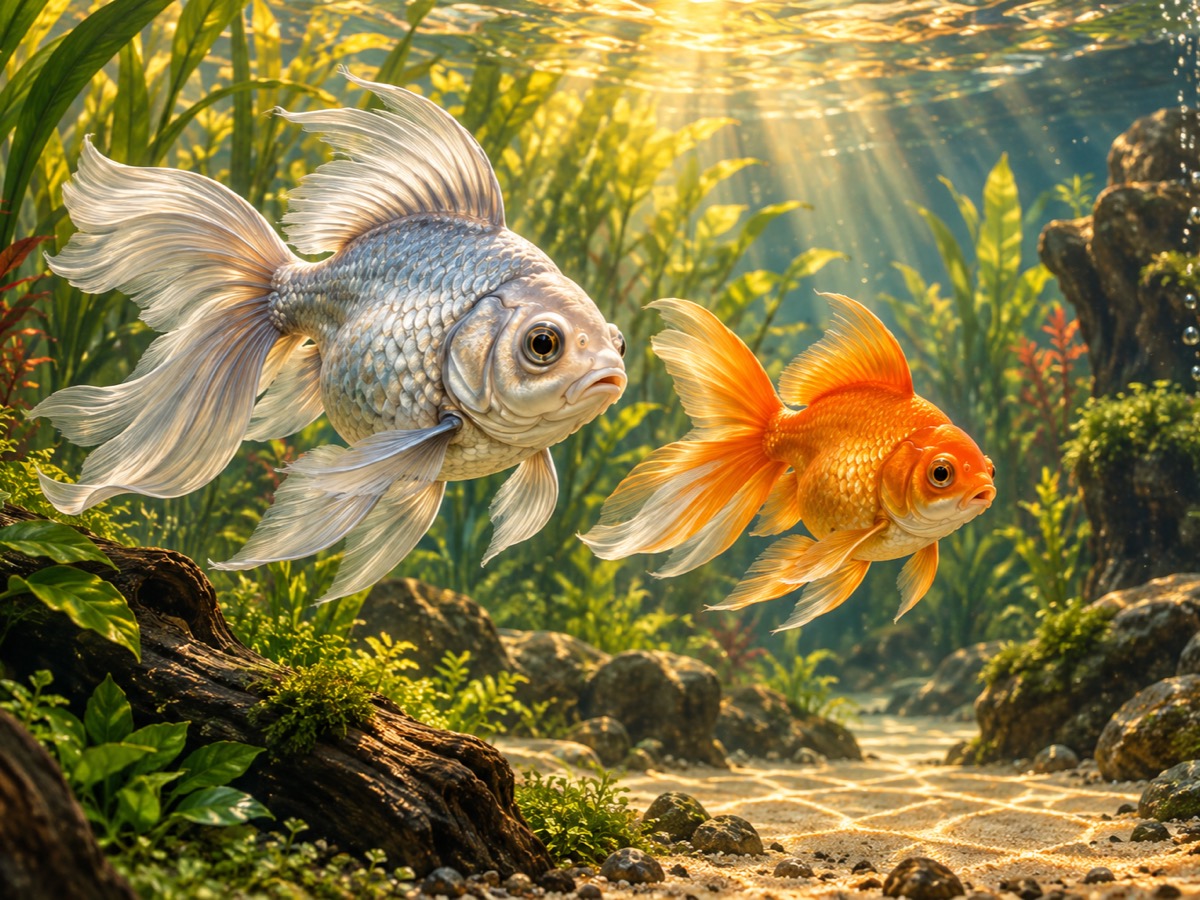
The oldest goldfish ever verified was a male named Tish, won at a fairground roll-a-penny stall in 1956 by a seven-year-old boy in North Yorkshire, England. Tish died on 6 August 1999 at the age of 43, one year after being certified as the record holder. As he aged, his scales shifted from bright orange to silver. The previous record holder, a British goldfish called Fred, reached 40 and died in 1980. Guinness also notes reports of goldfish in China living past 50, but those claims have never been authenticated.
The detail worth sitting with is the origin story. Tish came from a fairground stall, in a bag, exactly like the fish that usually die within a fortnight. He was not a specially bred specimen or the product of expert aquaculture. He was an ordinary goldfish that happened to be cared for well for four decades.
Guinness gives the typical figure as 10 to 15 years, with some varieties reaching their thirties under good care. That is the number to plan around. A goldfish is a longer commitment than most dogs.
Body shape changes the math
Not all goldfish carry the same odds, and the difference is anatomical rather than mysterious. Every goldfish is the same species, Carassius auratus, but centuries of selective breeding produced two broad groups with very different bodies.
Single-tail varieties, the commons, comets, and shubunkins, kept the long, streamlined, torpedo-shaped body of the wild ancestor. Their organs sit in a normal arrangement, they swim efficiently, and hobbyist consensus puts them at the long end of the range, commonly two decades or more and sometimes far beyond, especially in ponds.
Fancy varieties, the ranchus, orandas, fantails, ryukins, telescopes, and bubble eyes, were bred for compressed, egg-shaped bodies, doubled tails, wens, and modified eyes. Those traits are beautiful and they come with costs. A shortened body compresses the swim bladder and digestive tract, which is why buoyancy trouble is so much more common in fancies. Reported lifespans for fancy varieties cluster lower, often quoted around 10 to 15 years, though well-kept individuals do considerably better. If you are choosing between shapes, our overview of goldfish varieties from common to oranda is a good place to start, and the specifics of wen care are covered in our oranda goldfish facts.
None of this means fancies are a bad choice. It means their margin for error is thinner, and they need better water and more attentive feeding to reach the same age.
What actually kills young goldfish
Very few goldfish die of old age. They die of a small set of preventable causes, and nearly all of them trace back to the same root: a container too small for the waste the fish produces.
- Ammonia and nitrite poisoning. An uncycled tank has no bacterial filter, so waste accumulates as ammonia and then nitrite. Both damage gills and blood chemistry within days. This is what kills nearly every carnival goldfish.
- Chronic low-grade water quality. Not lethal today, but it steadily erodes gill tissue and immune function, which is why long-term bowl fish tend to die of an infection that a healthy fish would have shrugged off.
- Temperature shock. Goldfish are coldwater fish. Bagged fish dumped into water several degrees different, or tanks placed by sunny windows and radiators, take real damage from swings.
- Overfeeding. More food means more waste, and in fancy varieties it also means digestive and buoyancy problems.
- No filtration or aeration. Bowls have poor surface area for gas exchange and nowhere for beneficial bacteria to live.
These stack. A fish in a small, unfiltered bowl is fighting all five at once, which is why the bowl is not a stylistic preference but a welfare problem, as we argue at length in why goldfish bowls are a myth.
The stunting question, handled honestly
You will run into a widely repeated claim: that a goldfish kept in a small tank has its skeleton stunted while its internal organs keep growing, crushing itself from the inside. It is a vivid image and it appears everywhere online.
Be careful with it. Goldfish do show indeterminate growth, meaning they keep growing throughout life rather than stopping at a fixed adult size, and growth is clearly suppressed in confined conditions. But the specific mechanism, organs outgrowing a stunted frame, is disputed among fishkeepers and is not well supported by published research, and some experienced keepers argue that smaller fish are if anything more robust than heavily grown-out ones.
The honest version is more useful anyway. Small containers shorten goldfish lives primarily through water chemistry, oxygen availability, and the impossibility of stable conditions in a tiny volume, not through a contested squeezing mechanism. You do not need the dramatic explanation to reach the correct conclusion, which is that goldfish need real volume and real filtration.
Setting your fish up for a long life
Longevity in goldfish is not about a secret technique. It is about removing the things that cut lives short and then being consistent for a very long time.
- Cycle the tank before the fish arrive, and keep ammonia and nitrite at zero afterward. This single habit prevents most early deaths.
- Give them volume. More water is more chemical stability, more oxygen, and more room for a fish that will grow considerably larger than the one you bought.
- Filter generously and change water on a schedule rather than when the tank looks dirty.
- Keep them cool. Goldfish do better at room temperature or below than in heated tropical tanks, and cooler water holds more dissolved oxygen.
- Feed modestly and vary the diet. Sinking food helps fancy varieties avoid gulping air at the surface.
- Watch daily. Changes in swimming, appetite, or fin position are your earliest warning that something in the water shifted.
Do that consistently and you are not aiming at 43 years, you are aiming at 15 or 20, which is a realistic and genuinely achievable target for a well-kept fish. Our complete goldfish care guide covers the day-to-day routine.
Before you bring one home, do the arithmetic Tish’s owner effectively did. A goldfish acquired today may still be swimming when the child who chose it has finished school, moved out, and started a career. Plan the tank for that fish, not for this month.