
Recall is the only cue that might save your dog’s life. It is also the one most owners quietly give up on, usually after a stretch of standing in a field yelling a name into the wind while their dog investigates something far more interesting.
Recall failures follow predictable patterns, and almost all of them are fixable. The work is not complicated. It is just specific, and it requires you to stop doing a few things that feel natural.
Why your current recall stopped working
Coming when called is a competition. Every time you call, your dog runs a quick comparison between what you are offering and what the environment is offering. A squirrel, a fascinating smell, or another dog is a genuinely strong offer. If your side of the deal is a mild “good boy” and the end of the walk, you lose that comparison honestly.
Worse, most recall cues get poisoned over time. If “come” reliably predicts the leash going on, the bath starting, or the nail clippers coming out, your dog is not being stubborn when they hesitate. They have learned exactly what the word means and are making a reasonable decision. The American Kennel Club flags this directly as one of the main recall mistakes: only calling your dog when the fun is ending builds a negative association with the cue.
The second common mistake is repeating yourself. Calling “come, come, come, COME” teaches your dog that the first four are optional background noise. If your dog does not respond on the first call, that is information about the difficulty of the situation, not a reason to say the word again.
Start with a fresh word
If your current cue is already burned, do not try to rehabilitate it. Pick a new one, ideally something you would not shout in casual conversation. “Here,” “close,” or a distinctive whistle pattern all work. What matters is that the word has no history.
Then make a rule you will actually keep: this word only ever gets used when you can make coming to you worthwhile, and it is never followed by anything your dog dislikes. If you need your dog for a nail trim, walk over and get them. Do not spend the cue on it.
Choose your reward the same way. Recall pay needs to beat squirrels, so kibble is not going to do it. Small pieces of cooked chicken, cheese, or freeze-dried liver, reserved exclusively for recall, work far better than anything from the treat jar your dog sees every day. For some dogs a tennis ball or a burst of tug is the higher-value currency. Use whichever your dog actually chooses.
Build it in four stages
The single biggest error in recall training is skipping straight to the hard version. Each stage below should feel almost boringly easy before you move to the next one.
- Stage one, in the house. Wait until your dog is already ambling toward you, say the new cue once, and pay generously when they arrive. You are attaching the word to a behavior that is already happening. Do this a dozen times a day for a few days, in different rooms.
- Stage two, distance without distraction. Call from across the room, then from another room, then from the top of the stairs. Keep paying every single time. This is also where recall games earn their reputation. The AKC recommends playing catch me, where you call and then run backward so your dog chases you in; find me, where you hide and call; and hot potato, where two or more people take turns calling the dog back and forth across a room.
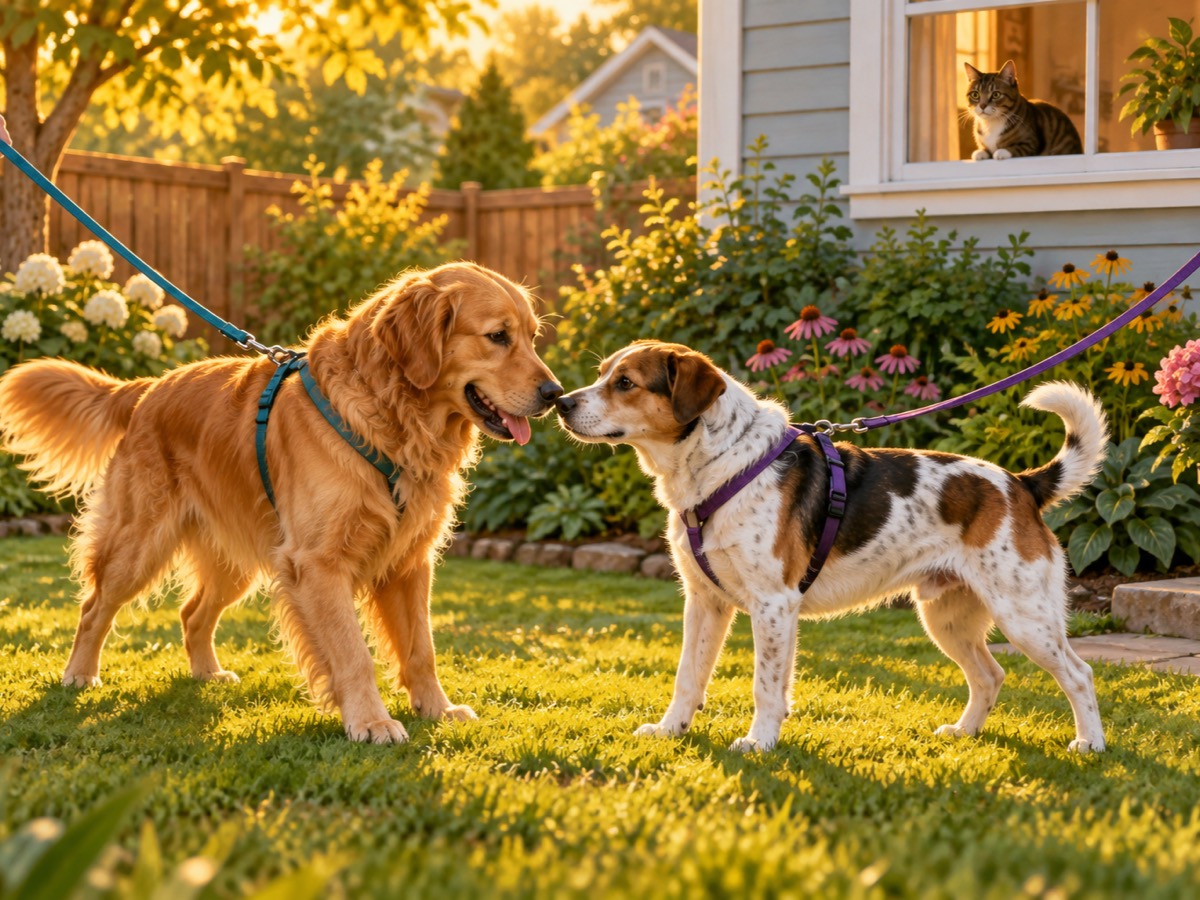
- Stage three, outdoors on a long line. Clip a fifteen to thirty foot line to a harness rather than a collar, and work in a quiet yard or empty field. The line is not there to reel your dog in. It is there to guarantee your dog cannot practice ignoring you, which is the habit you are trying to prevent. Skip retractable leashes here, because the constant tension teaches pulling, which is the opposite of what you want.
- Stage four, adding distractions deliberately. Increase difficulty on one axis at a time. More distance, or more distraction, or a newer location, but not all three at once. If your dog fails twice in a row, the situation is too hard. Move closer, go somewhere quieter, and rebuild.
Expect adolescence to knock this backward. A dog who was perfect at five months may become selectively deaf at ten. That is developmentally normal, and the answer is more long line work, not more volume. If you are building other cues at the same time, our guide to basic obedience skills every owner should teach covers how the pieces fit together.
The details that make recall stick
These are small, and they are the difference between a recall that works in the yard and one that works when it counts.
- Never punish a dog who comes back. Not even if they ignored you for two full minutes first, and not even if you are furious. Your dog connects the consequence to the last thing they did, which was arriving. Praise the arrival every time, no exceptions.
- Run away, do not chase. Turning and moving in the opposite direction triggers a chase instinct and pulls your dog toward you. Running at your dog does the reverse.
- Teach the collar grab separately. A dog who has learned that a hand reaching for the collar means fun ends will stop just out of reach. Practice touching the collar, giving a treat, and letting go, over and over, until the grab itself predicts good things.
- Call, then release. Most of your recalls in a park should end with a treat and the words “go play.” If coming back only ever ends the freedom, your dog does the math.
- Pay in the moment, keep it interesting. Once the behavior is solid, vary the size of the reward rather than dropping it. An occasional jackpot of five treats in a row keeps a dog far more motivated than a predictable single biscuit.
- Practice in short bursts. Five recalls done well beat twenty done sloppily, and recall is best practiced when your dog is not already exhausted.
Keep one emergency word in reserve
Alongside your everyday recall, build a second cue you use only in genuine emergencies. A different word entirely, or a specific whistle pattern.
Train it by pairing the sound with an extraordinary reward, a handful of roast chicken delivered piece by piece, in easy situations. Then practice it only a few times a month, always with the same enormous payoff, and never for anything routine. Because you almost never use it and it has never once been followed by something unpleasant, it stays powerful. That is the word you have available when your dog slips a collar near a road.
Be honest about off-leash
A trained recall is not a guarantee. It is a probability, and that probability drops with sufficient distraction in any dog. Some breeds, particularly scent hounds and independent working types, are simply harder to recall off a live scent trail, and no amount of chicken changes their wiring. That is worth factoring in early, which our guide to choosing the right dog breed for your lifestyle covers in more depth.
Keep using a long line in unfenced areas until your dog has succeeded consistently across many different environments, and respect local leash laws regardless. There is no shame in a dog who does his best work on thirty feet of line. A dog who comes back nine times out of ten on a long line is safe. A dog who comes back nine times out of ten off leash near traffic is not.