You imagined this moment for weeks: your new rescue dog trotting through the front door, exploring every room, curling up at your feet by evening. Instead, he’s pressed against the wall by the back door, refusing dinner, flinching at the ice maker. Or maybe she’s the opposite, a furry tornado who hasn’t stopped pacing since you got home.
Both are normal. The first two weeks with a rescue dog are rarely the montage you pictured, and that’s not a sign you chose wrong. It’s a sign your dog is doing exactly what dogs do when their entire world changes overnight: decompressing.
The 3-3-3 rule: a map for the road ahead
Rescue organizations often describe adjustment using the 3-3-3 rule: three days, three weeks, three months. In the first three days, most dogs are overwhelmed. They may sleep constantly, skip meals, hide, or seem shut down. Over the first three weeks, they start learning your routines and testing boundaries as trust builds. Somewhere around three months, many dogs finally exhale and show you who they really are.
Treat it as a rule of thumb, not a schedule. A confident young dog from a loving foster home might settle in days; a shy dog with a rough history might need six months. The point of the framework isn’t precision. It’s permission to stop panicking on day four when your dog still seems like a stranger.
Your job in these first two weeks sits squarely in the first two phases: keep the world small, keep it predictable, and let the dog come to you.
Days 1 through 3: less is more
The kindest thing you can do in the first 72 hours is almost nothing. No welcome party, no trip to the pet store, no dog park, no parade of neighbors. Your dog has just left everything familiar, however imperfect it was, and needs quiet time to learn that this new place is safe.
A few ground rules that make those first days easier:
- Give the dog a den: a crate with the door open, or a bed in a quiet corner, that is theirs alone and off-limits to kids and other pets
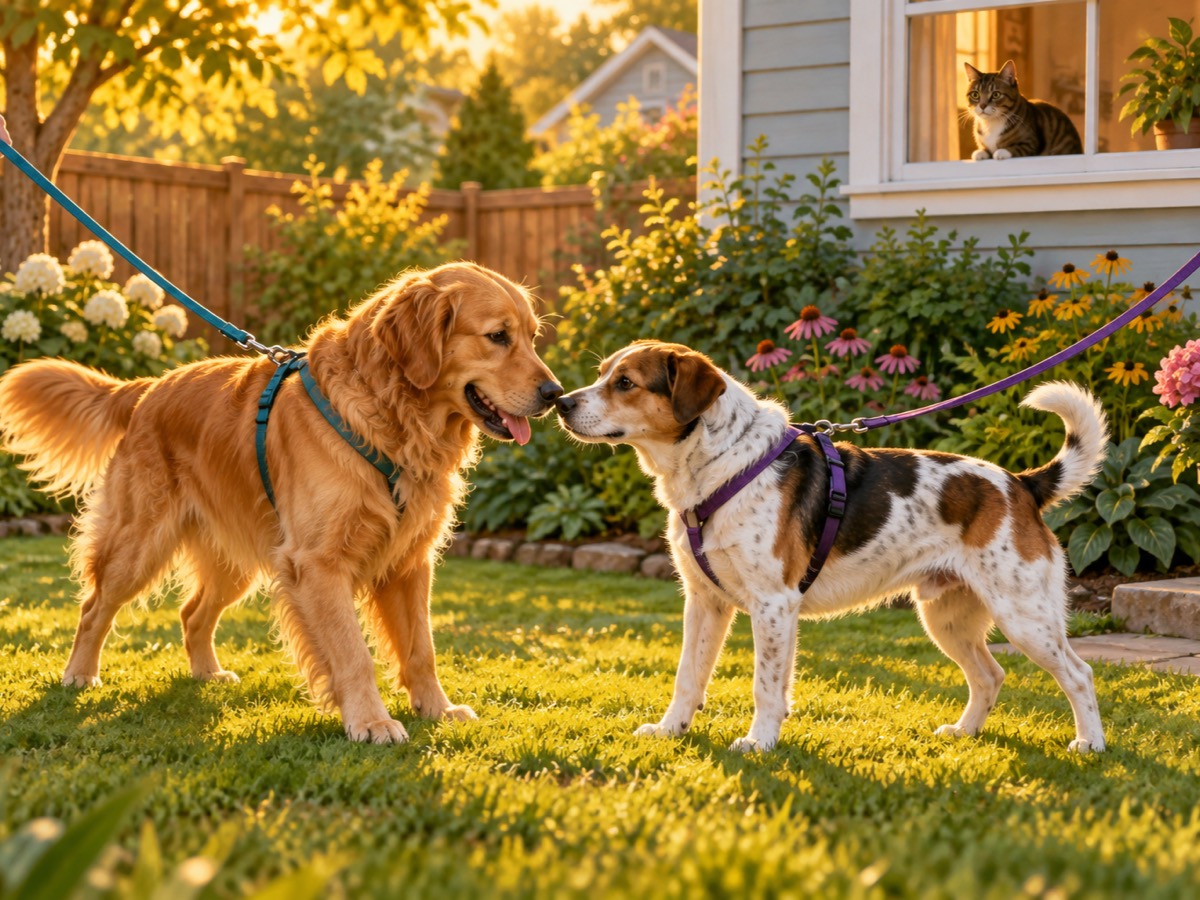
- Keep a leash on for potty breaks, even in a fenced yard; newly adopted dogs are notorious flight risks before they’ve bonded to you
- Feed the same food the rescue was using, in the same quiet spot, and don’t worry if a stressed dog eats little for a day or two
- Skip the bath unless it’s truly necessary; being wrestled into a tub by a stranger is nobody’s idea of a trust exercise
- Let the dog approach you rather than looming, reaching over their head, or hugging
If you set up your house before pickup day, this stage runs smoother. Our guide to preparing your home for a new dog covers the supplies and dog-proofing worth doing in advance.
Days 4 through 14: build the routine, guard the calm
As the initial shock fades, your dog starts studying you. When does food happen? Where do we sleep? What happens when I sit by the door? Dogs relax when life is predictable, so give them a pattern they can count on: meals, walks, potty breaks, and bedtime at roughly the same times every day.
This is also when the dog you met at the shelter may start to shift. The shut-down dog gets bolder, sometimes bold enough to chew a shoe or counter-surf. The frantic dog mellows. Some dogs test rules they seemed to follow perfectly in week one. Stay consistent and unbothered. Decide now what the house rules are, get every family member enforcing the same ones, and reward the behavior you want rather than punishing the behavior you don’t. A dog still figuring out whether you’re safe learns nothing useful from being yelled at.
Start practicing short absences, too. Leave for five minutes, come back calmly, and gradually stretch the time. A dog who has just lost one home can be primed to worry when you disappear, and easing into alone time now beats discovering separation distress the first day you’re gone for eight hours.
The vet visit and other early errands
Schedule a wellness exam within the first week or two, even if the rescue’s paperwork says everything is current. Your vet establishes a baseline, checks the microchip registration, and catches anything the shelter’s busy clinic might have missed. Bring the medical records you received at adoption; here’s how to make that first vet visit easy on both of you.
Beyond the vet, keep errands minimal. Every new place is another wave of novelty for a dog whose stress bucket is already full. Two weeks in, a calm walk on a quiet street is plenty of adventure.
When to worry, and when to just wait
Most rough patches in the first two weeks resolve with time and routine. A few things deserve a call to your vet or the rescue rather than patience:
- Refusing all food and water for more than a day or two, or vomiting and diarrhea that persist
- Growling, snapping, or stiff freezing around food, toys, or handling that seems to be escalating
- Panic when left alone: sustained howling, destruction focused on doors and windows, or self-injury
- Any bite, even one that doesn’t break skin
None of these automatically mean the adoption was a mistake. They mean you need backup early, while problems are still small. Good rescues expect these calls and would far rather troubleshoot with you than hear nothing until you’re at a breaking point.
The payoff is coming
Somewhere in the coming weeks, there’s a moment every adopter remembers: the first deep sigh as the dog flops against you, the first goofy play bow, the first morning they greet you like you hung the moon. It rarely happens in the first two weeks, and it doesn’t need to.
Right now, your only job is to be boring, consistent, and kind. Keep the world small. Keep the schedule steady. Let your dog discover, at their own speed, that this home is the one that sticks. The dog you adopted is not the dog you’ll have in three months, and almost every adopter will tell you the same thing: the real one is even better.