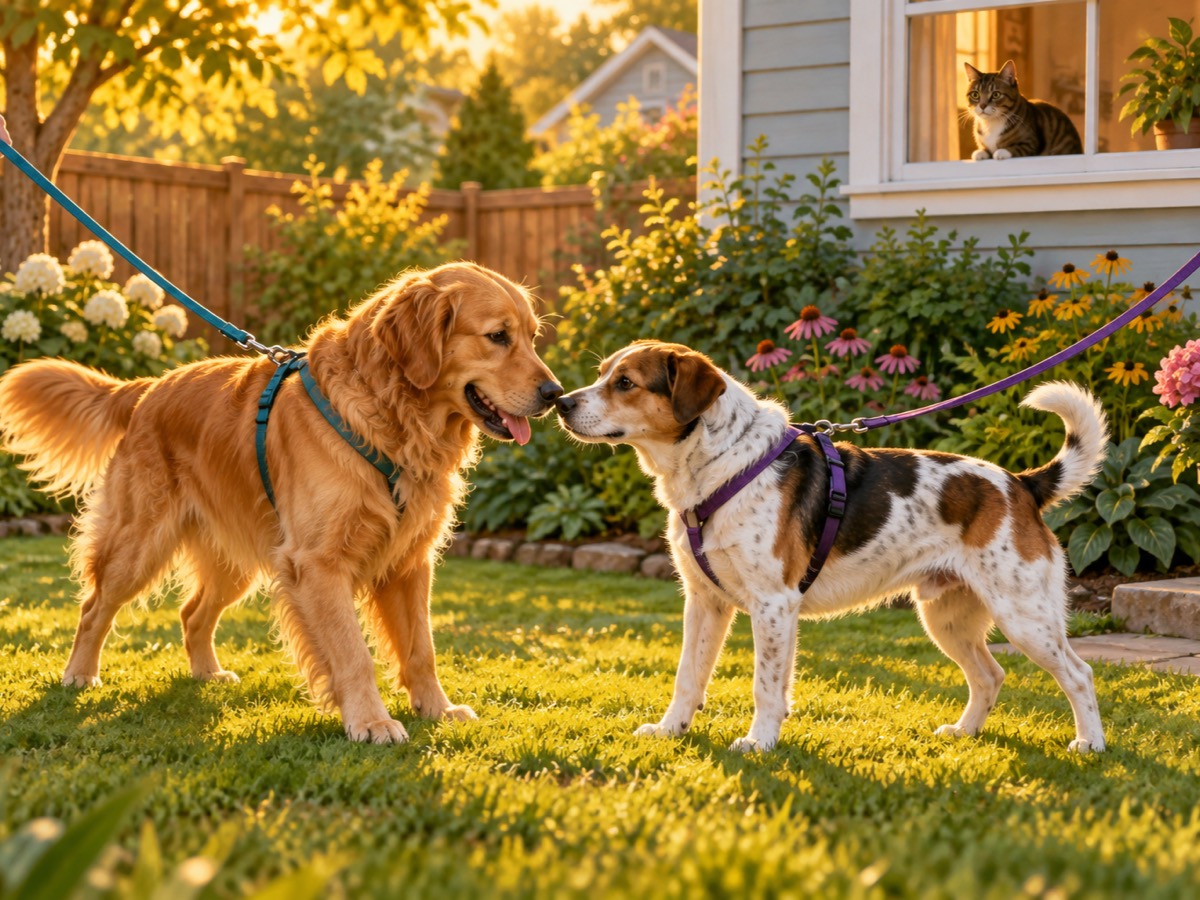
For a few weeks, your pet had the best possible arrangement: people home all day, extra walks, snacks appearing at odd hours, someone always available to be leaned on. Then the term starts, the holidays end, work resumes, and the house empties out at eight in the morning.
From your pet’s side, nothing was explained. Their entire social world left at once, and they have no idea whether it is coming back. That abruptness is what causes trouble — not the hours alone, but the size and speed of the change.
Start the week before, not the morning of
The single most effective thing you can do is make the change gradual. Veterinary guidance on this transition is consistent: begin at least a week or two ahead, so the new routine is already familiar before it arrives alongside every other change in the household.
- Shift meal times toward the new schedule in small steps of fifteen or twenty minutes, a few days apart.
- Move walks and play to the times they will actually happen once term starts — usually earlier in the morning and later in the evening.
- Practice leaving the house properly, with everyone gone, at roughly the hour it will happen.
- Wind down the constant contact. If your dog has spent weeks with a person always within touching distance, start giving them quiet time in another room while you are still home.
If you did not get the lead time and the change has already happened, all of this still works. You are just doing it retrospectively, and you should expect a slower adjustment.
Build alone time in small, boring doses
Being alone is a skill, and plenty of pets have never had to learn it — particularly animals who joined the household during a period when someone was always home. The ASPCA’s advice is to give your pet practice with short periods of alone time every day, and to shorten your departures again if you see signs of stress, back to a length where they can genuinely relax.
Work in this order, and only move up when the current step is genuinely dull for your pet.
- Start with separation inside the house: a baby gate or closed door between you for a minute or two while your pet has something good to do.
- Build to leaving the house for a couple of minutes, then five, then fifteen, then longer. Vary the lengths rather than always increasing, so the pattern is unpredictable in a good way.
- Leave and return calmly. No emotional goodbyes, no ecstatic reunions. Ignore the first minute or two of greeting, then say hello once your pet has settled.
- Break the departure cues. Pick up your keys and sit back down. Put your shoes on and make coffee. The ASPCA recommends teaching your dog that these signals do not reliably mean you are leaving, which takes the sting out of them.
- Watch for early stress rather than waiting for the obvious version — pacing, panting, drooling, yawning, trembling, or refusing food they would normally take.
Never punish your pet for what happens while you are out. The ASPCA is direct about this: anxious behavior is not disobedience or spite, and scolding a dog for a chewed door or a puddle only adds fear to an animal who is already frightened. It also has no effect, because they cannot connect your reaction to something they did hours earlier. All the work here is positive-reinforcement work — rewarding calm, building good associations, and never using fear as a tool.
Make the empty house worth being in
The hardest stretch is usually the first thirty to sixty minutes after everyone leaves. Fill that window and much of the problem disappears.
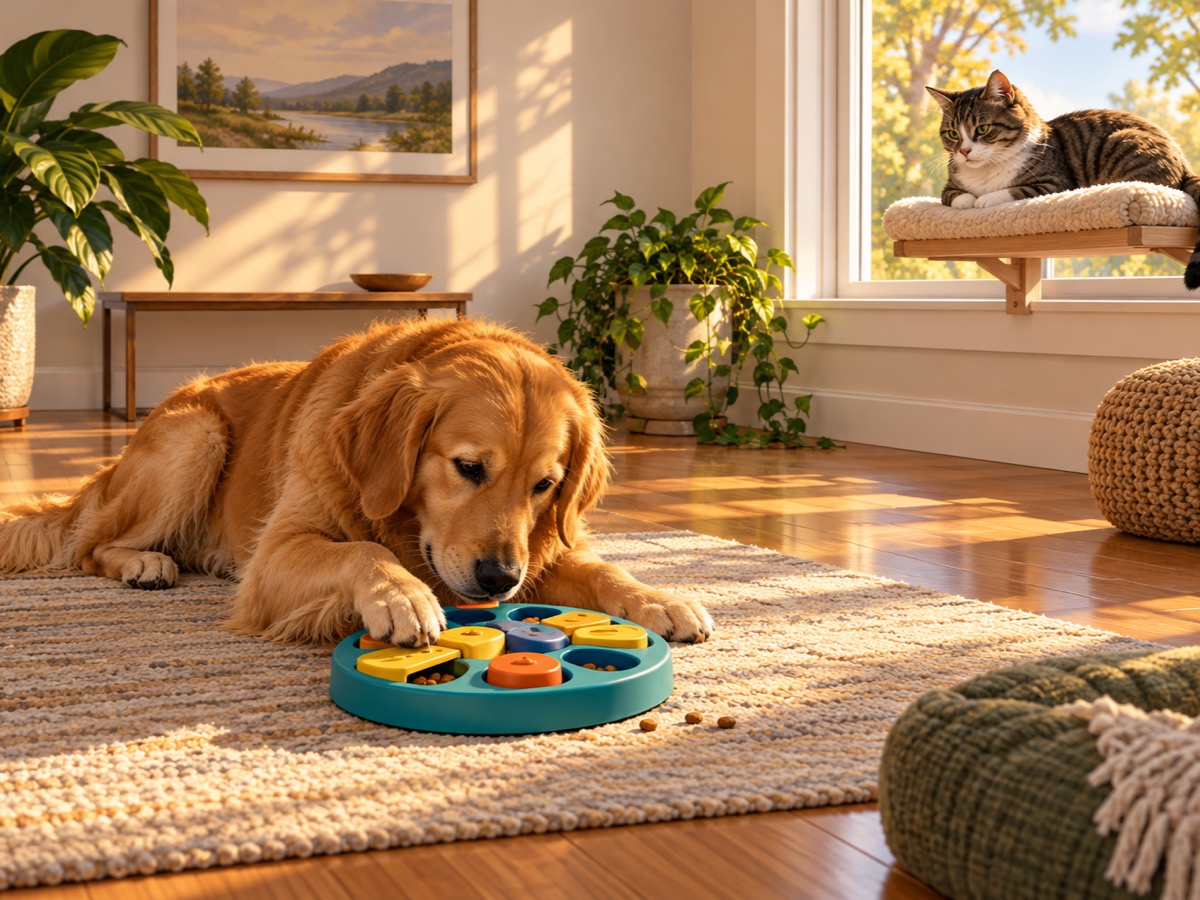
- Give a food puzzle or stuffed chew toy at the moment of departure, ideally something that takes twenty to thirty minutes to finish. Frozen fillings last longer. This does double duty: it occupies the worst window and it builds a positive association with you leaving.
- Scatter part of the daily food ration around the house or garden instead of serving it in a bowl. Foraging is genuinely satisfying work for both dogs and cats.
- Exercise before departure, not after. A morning walk or a proper play session lowers arousal for hours. Our guide to how much exercise your dog really needs helps you judge the right amount.
- Leave something with your scent — a worn shirt on their bed is worth more than you would think.
- Rotate toys. Three that change weekly beat twelve that never move.
- Give cats a window view, a warm resting spot and vertical space to climb. Our guide to indoor cat enrichment has more low-cost ideas.
Background sound helps some animals and does nothing for others. Try it, watch what happens, and do not assume a radio is a solution on its own.
Cats deserve a note of their own here. They are frequently assumed to be indifferent, and they are not. A cat whose house suddenly empties may over-groom, stop using the litter tray, hide, eat less, or become unusually vocal. Any change in litter tray habits or appetite in a cat should be checked by a vet rather than filed under stress, because several medical problems present the same way.
Boredom, or real separation anxiety?
These need different responses, and the distinction is worth getting right.
A bored dog is destructive because there is nothing else to do, and the ASPCA notes that bored dogs usually do not look anxious and may chew or dig whether or not you are home. The fix is more exercise, more mental work and better management of what they can reach.
Separation anxiety looks different. The behavior happens almost exclusively when the dog is alone, it often starts within minutes of your departure, and it is panic rather than mischief. Signs include urinating or defecating when left alone despite being reliably house-trained, persistent barking or howling, destructive chewing and digging — very often at doors and windows rather than random objects — attempts to escape, and pacing in a fixed pattern. Many dogs also become visibly agitated while you are still getting ready to go.
The ASPCA notes that losing an important person, a sudden schedule change, a house move or a change of guardian can all trigger it, which is exactly why the end of a long stretch at home is such a common flashpoint. If that sounds like your dog, our detailed guide to separation anxiety signs and solutions is the next thing to read.
When to bring in help
Go to your vet — not to the internet — if your pet injures themselves trying to escape, breaks teeth or nails on doors or crates, panics the moment you touch your keys, will not eat while you are out, or if the behavior is getting worse rather than better after a few weeks of consistent work.
Your vet’s first job is to rule out medical causes, because pain, cognitive decline in an older animal, and several illnesses can look like anxiety. From there, moderate to severe cases usually need a structured desensitization plan built with a qualified, rewards-based trainer or a veterinary behaviorist, and often medication alongside it. That combination is standard treatment, not a last resort, and it works considerably better than either part alone.
In the meantime, practical support is fair game: a midday visit from a neighbor or a paid walker, daycare a couple of days a week, or simply splitting the absence in half. Shortening a lonely day is not cheating — it is management while the training does its slower work. Most pets settle into the new normal within a few weeks when the change is handled deliberately rather than all at once.